The SEO + AI Visibility Checklist for 2026

34 practical steps to help your business get found on Google, ChatGPT, AI Overviews, and everywhere buyers search
SEO is not only about ranking on Google anymore.
The basics still matter: your website needs to be fast, secure, easy to crawl, technically healthy, and useful for the people visiting it.
But today, visibility goes further.
Your business also needs to be clear enough for AI tools like ChatGPT, Gemini, Perplexity, Copilot, and Google AI Overviews to understand what you do, who you help, and why your company should be included in relevant answers.
That changes how businesses should approach SEO.
It is no longer only about keywords.
It is about being discoverable, understandable, credible, and useful across the full search journey.
For B2B companies, e-commerce brands, industrial businesses, professional service firms, and regional companies expanding across Asia, this matters even more. Buyers often research long before they contact you. They compare options, read third-party sources, check LinkedIn, look at case studies, ask AI tools, and only then decide who deserves a conversation.
The question is no longer only:
“Are we ranking on Google?”
The better question is:
“When buyers ask the market who can help them, are we part of the answer?”
This checklist will help you understand what needs to be in place.
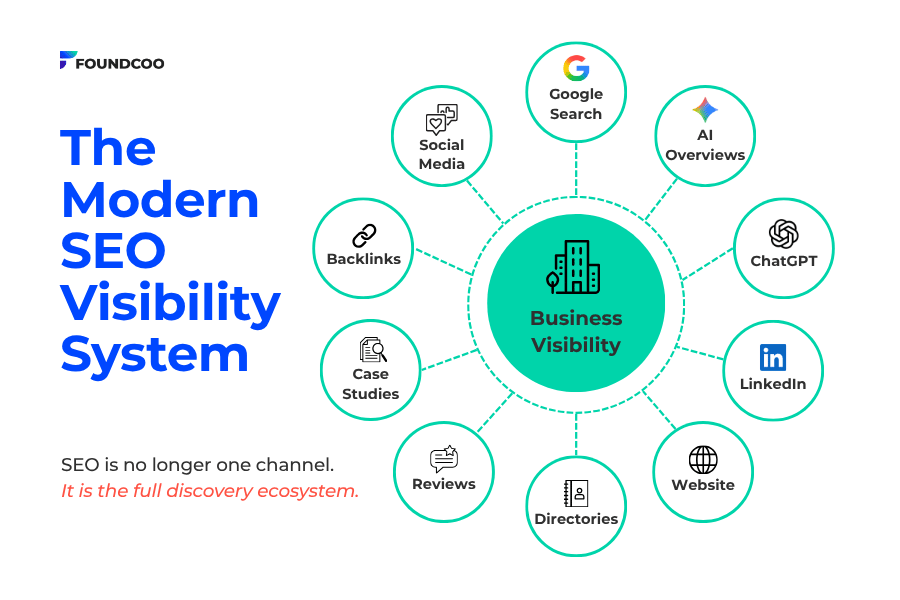
Table of Contents
Part 1: Build a Strong SEO Foundation
Before working on AI visibility, content, or backlinks, your website needs the basic SEO structure in place. Without this foundation, search engines may struggle to crawl your pages, track your performance, or understand your site.
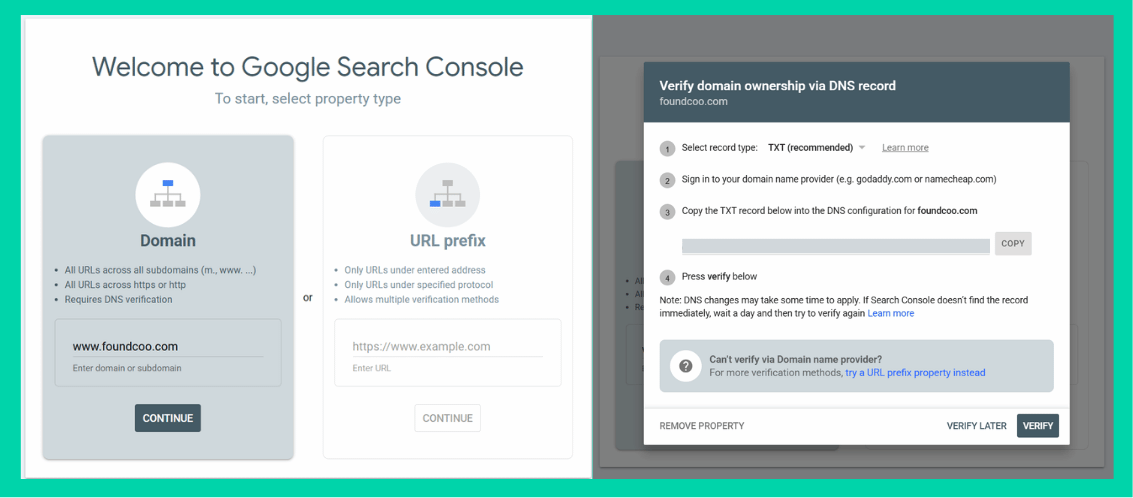
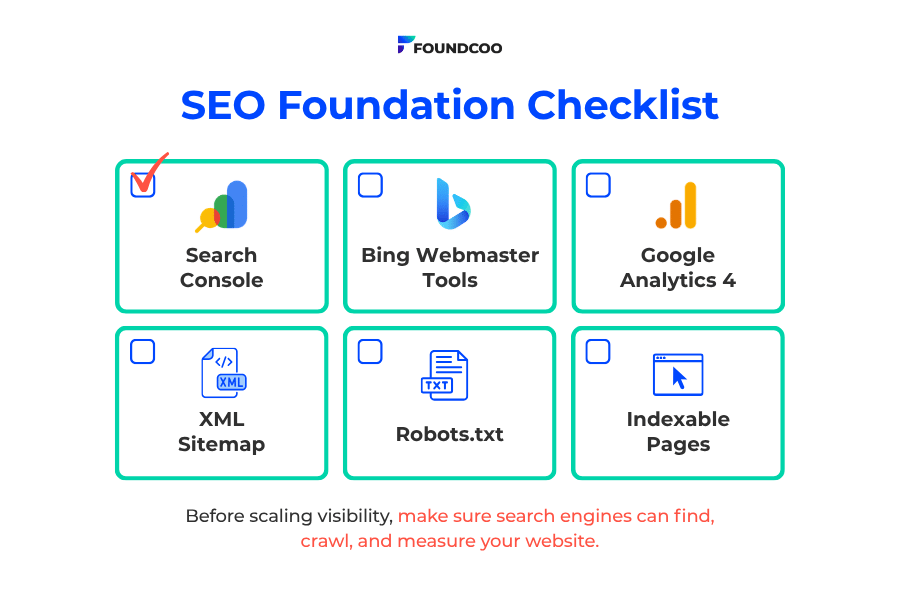
1. Set up Google Search Console
Google Search Console helps you understand how your website performs in Google Search.
It shows which queries bring impressions and clicks, which pages are indexed, which pages have issues, and whether Google can properly access your website.
For any business serious about SEO, this is not optional. It is one of the first tools that should be connected and checked regularly.
2. Set up Bing Webmaster Tools
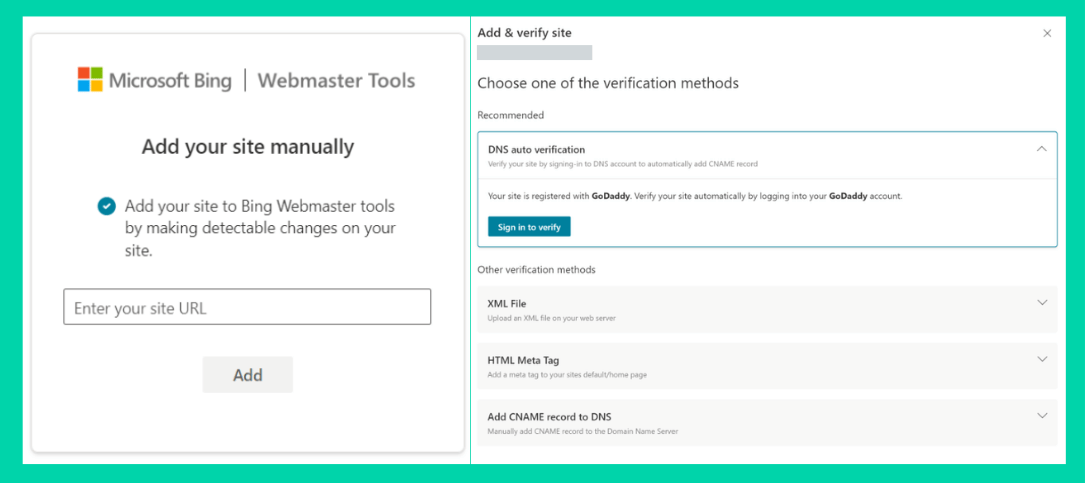
Many companies ignore Bing, but that is a mistake.
Bing powers part of the Microsoft search ecosystem, and Microsoft Copilot is becoming part of how people discover information. If your business wants visibility across AI-driven search experiences, Bing Webmaster Tools should be part of your setup.
It helps you submit sitemaps, detect crawling issues, and monitor your presence in Bing.
3. Install GA4 and track meaningful actions
Traffic alone is not enough.
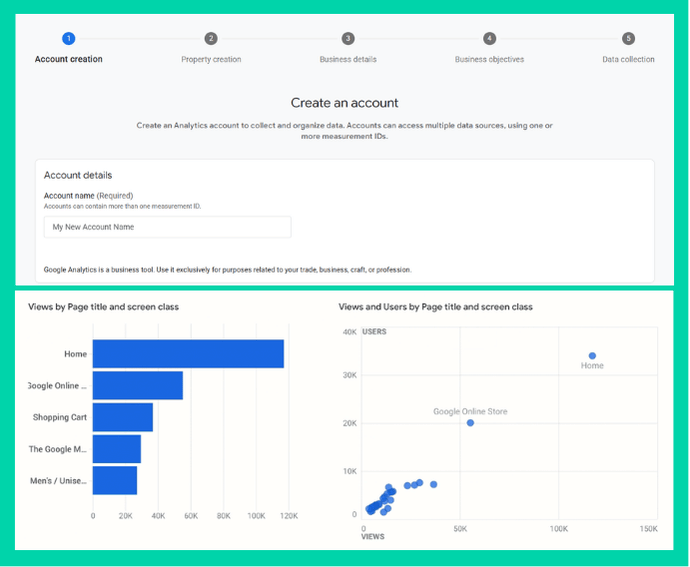
You need to understand what people do after they land on your website. Are they reading your content? Visiting service pages? Downloading resources? Submitting forms? Booking calls? Leaving after a few seconds?
GA4 helps you understand user behaviour and conversion paths. For B2B companies, this is important because not every valuable visit becomes an immediate enquiry. Some visitors return several times before taking action.
Track what matters: form submissions, demo requests, contact clicks, newsletter sign-ups, downloads, quote requests, e-commerce actions, and high-intent page visits.
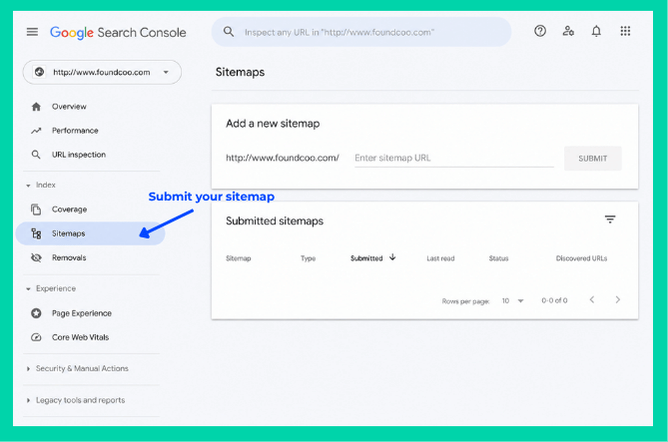
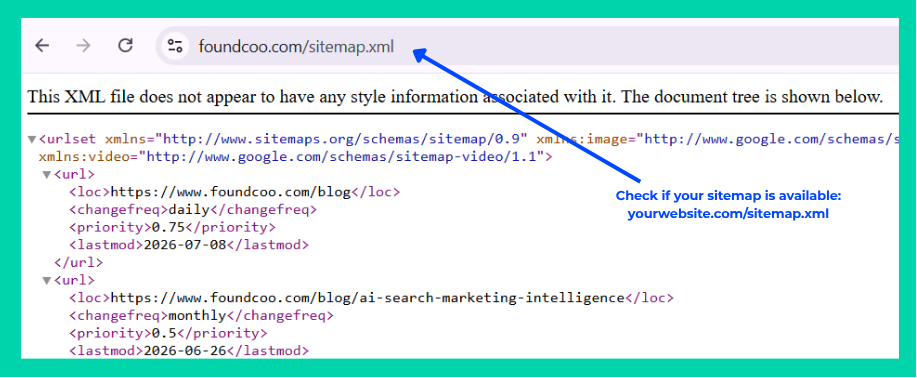
4. Submit a clean XML sitemap
An XML sitemap helps search engines discover the important pages on your website.
Your sitemap should include the pages you actually want indexed: service pages, product pages, category pages, case studies, articles, and key landing pages.
It should not be full of outdated, duplicate, broken, or low-value URLs.
A clean sitemap makes it easier for search engines to understand your site structure and find your most important content.
5. Check your robots.txt file
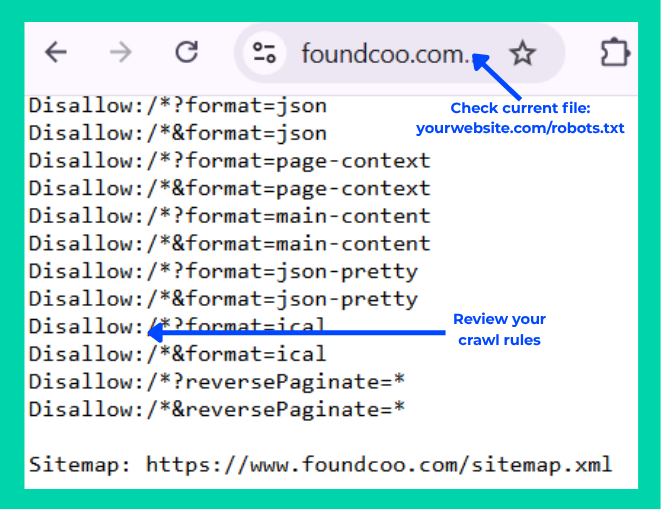
Your robots.txt file tells crawlers which areas of your website they can or cannot access.
This matters even more now because some AI crawlers may use similar access rules to discover or interpret content. If important pages are accidentally blocked, your visibility can suffer.
Check that your key pages, resources, articles, product pages, and service pages are crawlable.
6. Make sure your main pages are indexable
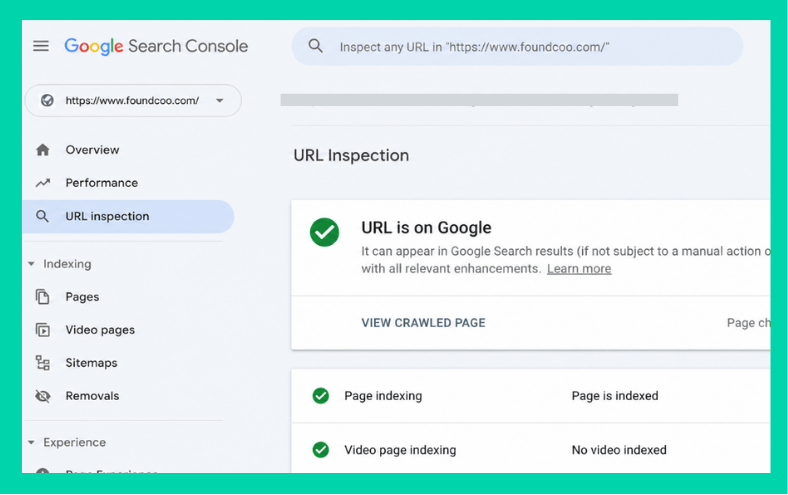
A page cannot rank if it is not indexed.
Check that your most important pages are not blocked by noindex tags, incorrect canonical tags, robots.txt rules, or technical errors.
This includes your homepage, service pages, e-commerce categories, product pages, case studies, blog articles, and location pages.
For B2B companies, your most commercially important pages should always be easy for search engines to find and index.
Part 2: Understand What Your Buyers Are Searching For
SEO should not start with what your company wants to say.
It should start with what your buyers are trying to understand.
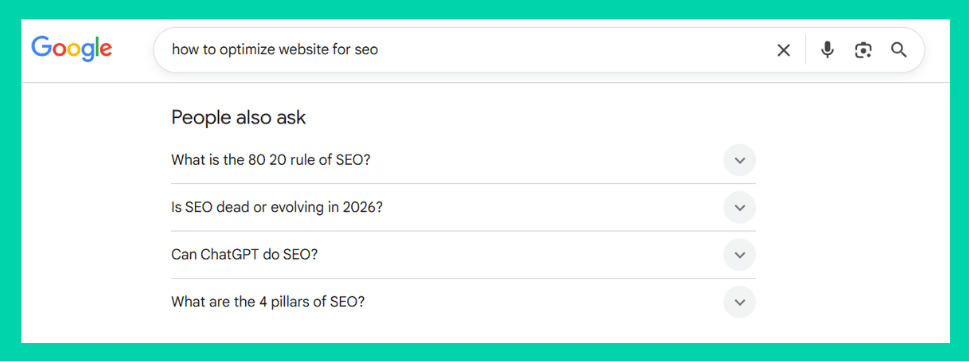
In the AI search era, this means looking beyond traditional keywords. You also need to understand the questions, comparisons, prompts, and concerns your audience uses when researching solutions.
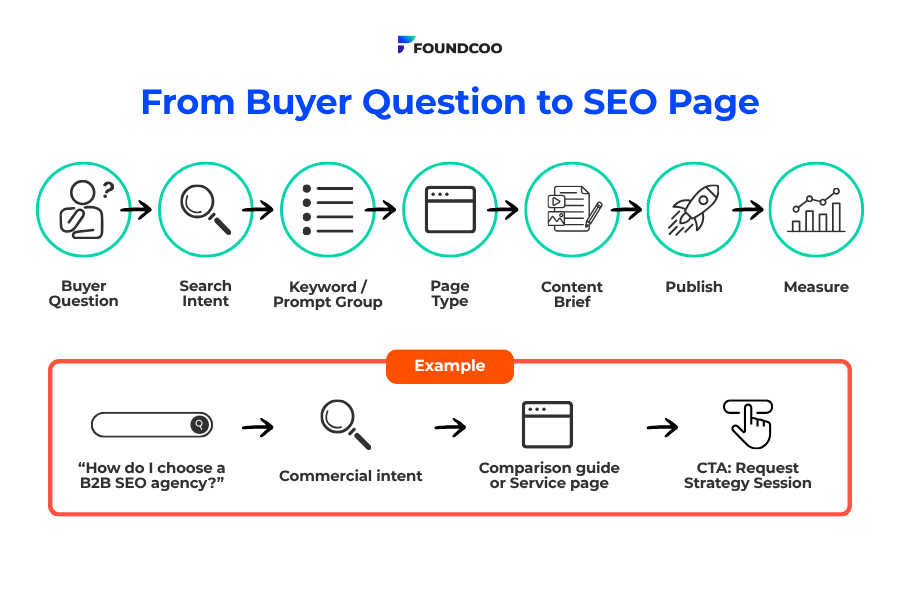
7. Identify your core buyer questions
Start by listing the real questions buyers ask before they contact you.
For example:
“What is the best solution for this problem?”
“How do I compare suppliers?”
“What does this service cost?”
“What should I check before choosing a provider?”
“Which company has experience in my industry?”
“What are the risks if we choose the wrong solution?”
These questions should guide your content strategy.
If your website does not answer the questions buyers are already asking, you are leaving space for competitors and AI-generated answers to shape the conversation.
8. Research keywords by intent, not only volume
High search volume is not always the best opportunity.
A keyword with lower search volume but strong buying intent may be far more valuable than a broad keyword that attracts unqualified traffic.
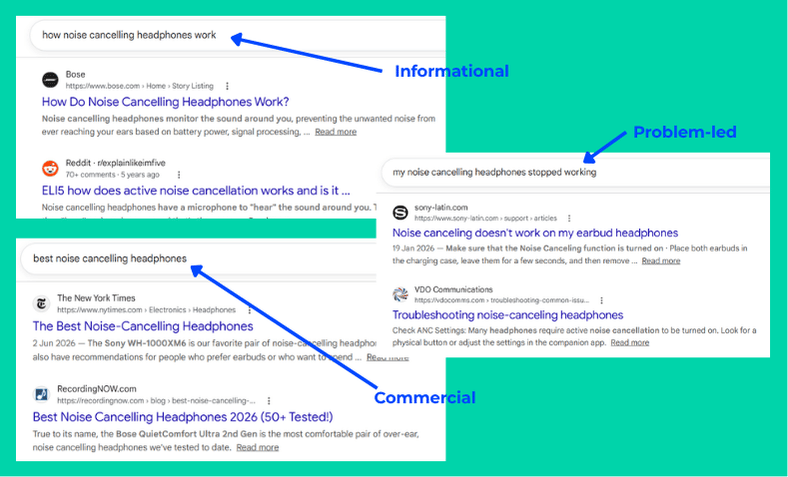
Group your keywords by intent:
Informational: people want to learn
Commercial: people are comparing options
Transactional: people are ready to act
Navigational: people are searching for a brand or company
Problem-led: people are trying to solve a specific issue
For Foundcoo’s clients, especially B2B and industrial companies, problem-led and commercial-intent keywords are often the most valuable.
9. Look at competitor keyword gaps
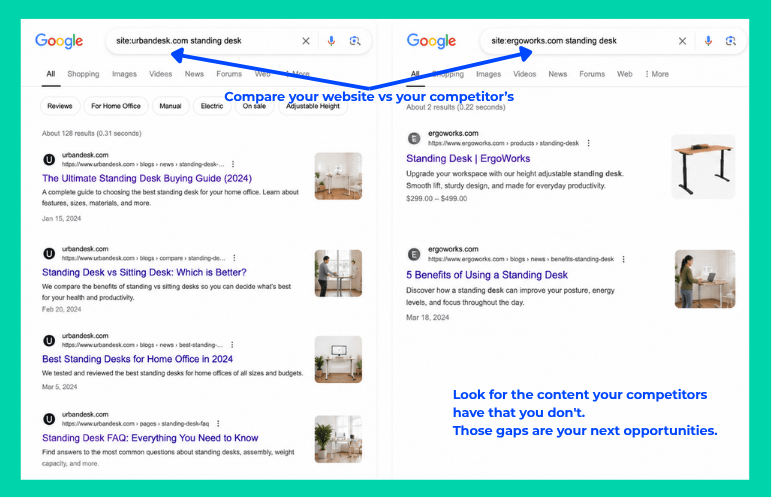
Your competitors may already be ranking for topics that should belong to your brand.
A keyword gap analysis shows which terms your competitors appear for and where your website is missing.
This is useful because it gives you a clearer roadmap. Instead of guessing what to publish next, you can see where competitors are getting visibility and decide which opportunities are relevant to your business.
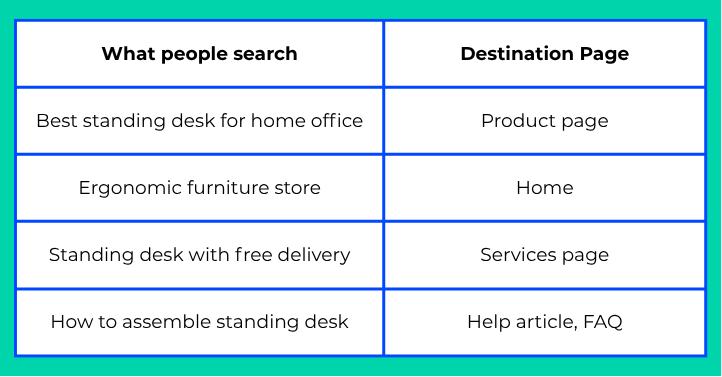
10. Map keywords and prompts to the right pages
Do not create random content without structure.
Each important keyword group or buyer question should map to a specific page.
For example:
Service keywords should map to service pages.
Product keywords should map to product or category pages.
Comparison keywords may need dedicated comparison articles.
Question-based searches may fit FAQ sections or educational articles.
Industry-specific searches may need sector landing pages.
AI prompts may need clear, direct-answer content.
This prevents content overlap and helps each page serve a clear purpose.
11. Study the search results before creating content
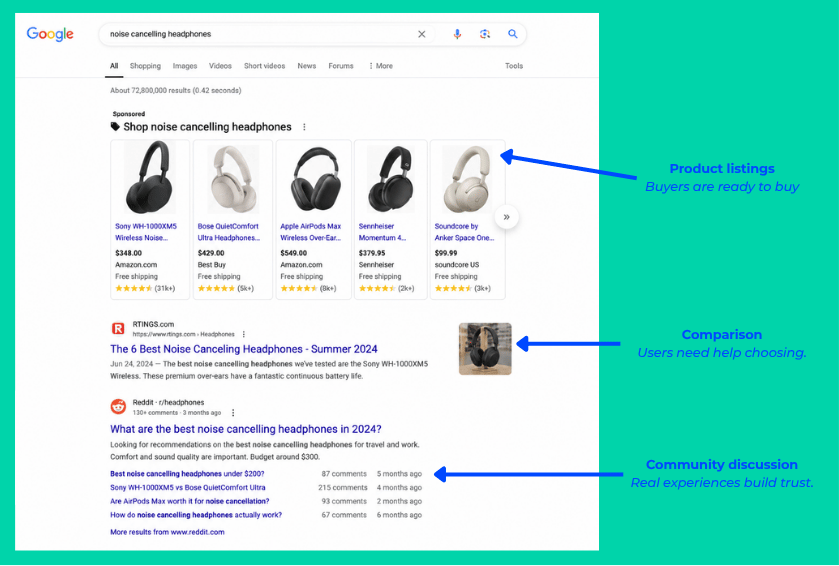
Before writing a page, look at what already appears in Google.
Are the top results guides, product pages, lists, videos, comparison articles, or service pages?
This tells you what users expect.
Then check how AI tools answer the same question. Do they summarize vendors? Mention criteria? Explain risks? Provide step-by-step advice?
This gives you insight into how your content should be structured.
12. Collect questions from sales conversations
Your sales team is one of your best SEO sources.
The questions prospects ask during calls are often the same questions other buyers are typing into Google or asking AI tools.
Turn these questions into website sections, FAQs, articles, guides, and LinkedIn content.
The more your content reflects real buyer language, the more useful it becomes.
Part 3: Fix the Technical Issues That Limit Visibility
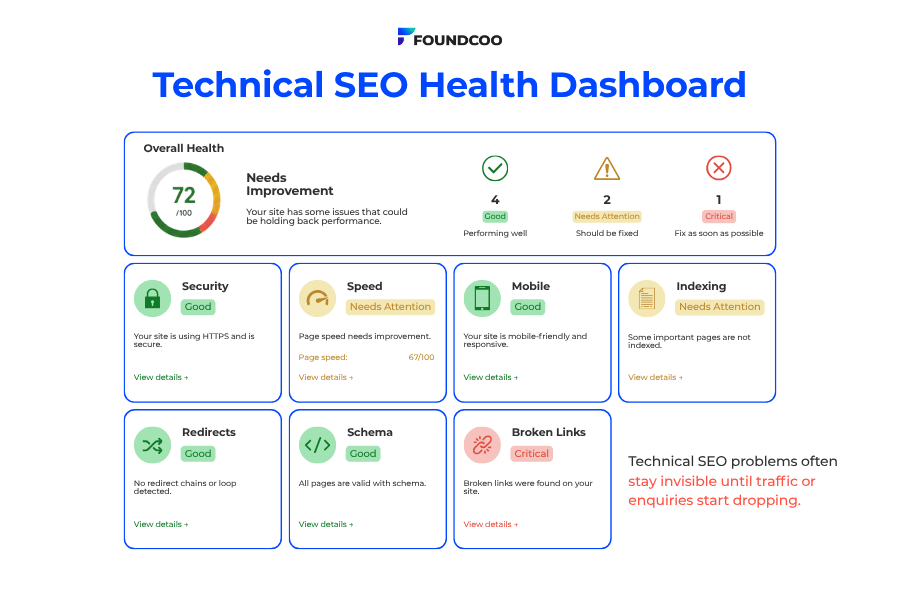
Technical SEO is not the most glamorous part of marketing, but it can quietly make or break performance.
If your site is slow, confusing, duplicated, broken, or hard to crawl, your content may never reach its full potential.
13. Use HTTPS across the whole website
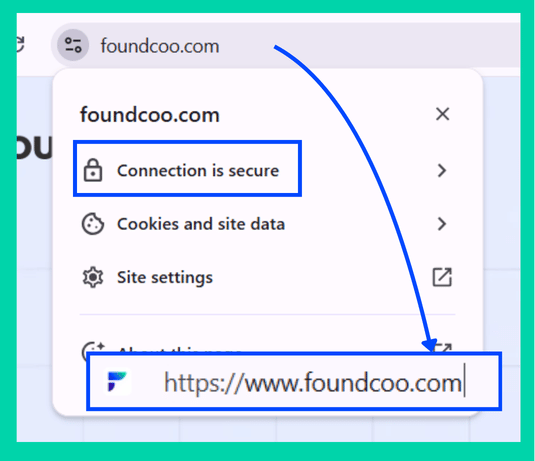
Your website should be secure.
HTTPS protects users and is now expected by both visitors and search engines. If your website still has mixed content, expired certificates, or insecure pages, this should be fixed immediately.
Security is a basic trust signal.
14. Fix duplicate versions of your domain
Your website should have one main version.
For example, these should not all load separately:
https://www.example.com
https://example.com
http://www.example.com
http://example.com
Choose one preferred version and redirect the others correctly.
This avoids duplicate content, tracking confusion, and indexing issues.
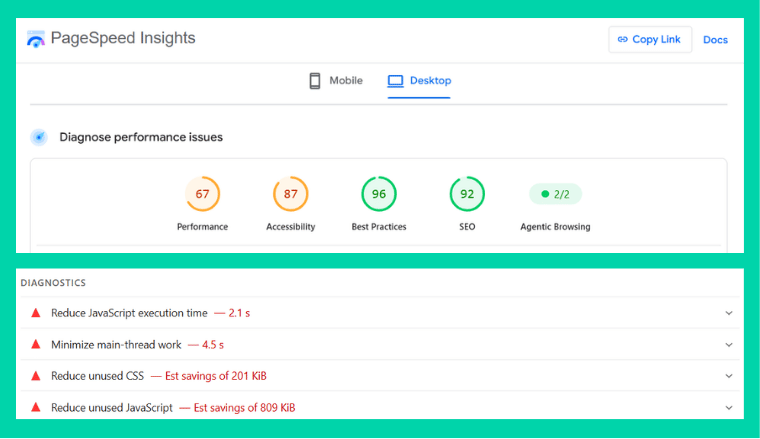
15. Improve website speed and Core Web Vitals
Speed matters because people do not wait.
A slow website creates a poor user experience, especially on mobile. It can also affect how search engines evaluate your pages.
Check loading speed, image size, scripts, layout shifts, server response time, and mobile performance.
For e-commerce websites, speed is even more important because slow pages can directly reduce conversions.
16. Fix broken links and redirect errors
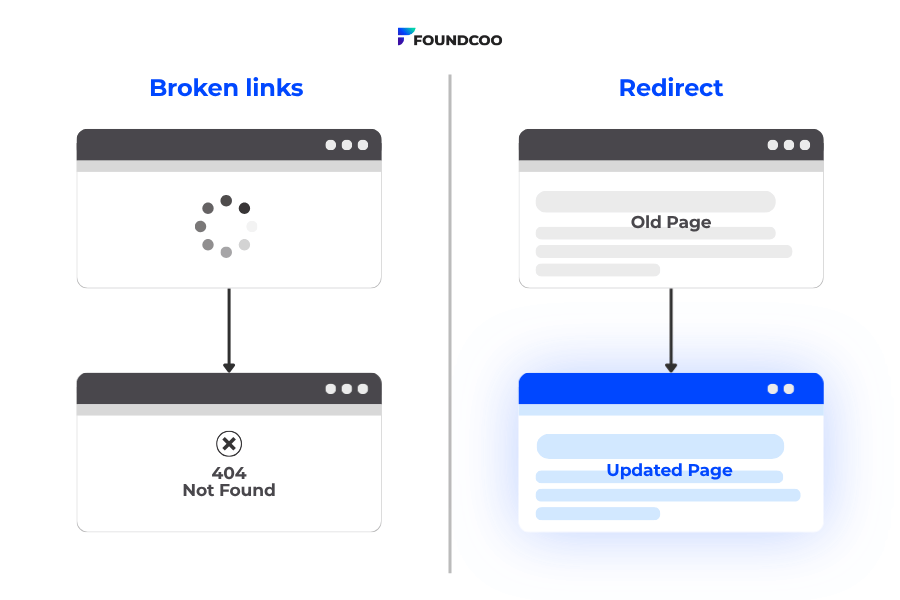
Broken links create a poor experience for users and search engines.
Check for:
404 pages
Broken internal links
Redirect chains
Redirect loops
Outdated URLs
Deleted pages that still receive traffic
Old campaign links pointing nowhere
Fixing these issues helps preserve authority and makes your website easier to navigate.
17. Make your website mobile-friendly
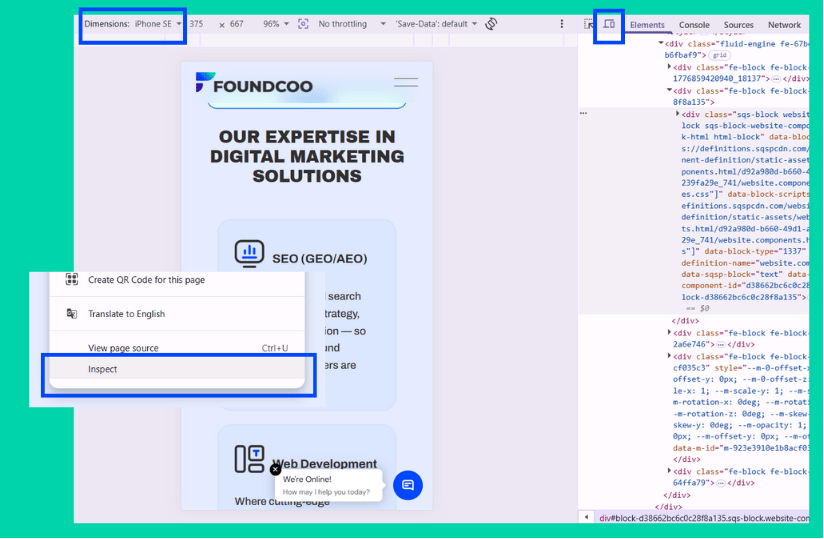
Most buyers will interact with your website on mobile at some point, even in B2B.
Your site should be easy to read, scroll, click, and navigate on smaller screens.
Check buttons, forms, menus, fonts, spacing, page speed, and layout.
A page that looks good on desktop but feels frustrating on mobile can lose leads before you even know they were interested.
18. Add structured data where it makes sense
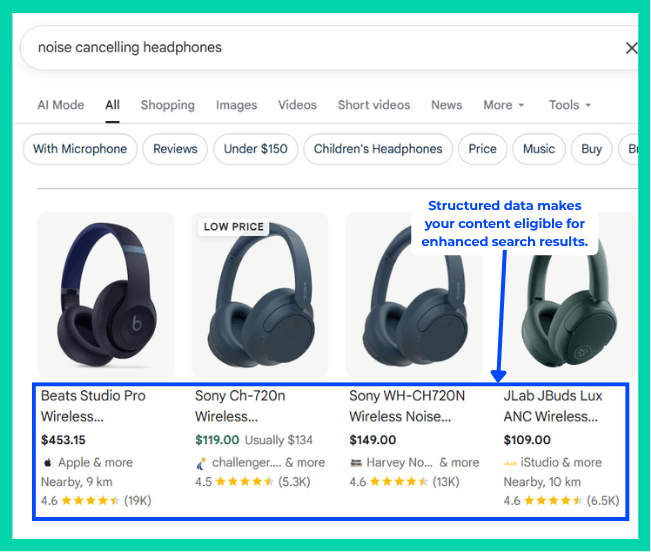
Structured data helps search engines understand your content more clearly.
Useful schema types may include:
Organization
Local Business
Article
FAQ
Product
Service
Review
Breadcrumb
Event
Video
Structured data does not guarantee rankings, but it improves clarity and can help your content be interpreted more accurately.
For AI visibility, structured and clearly organized information is becoming even more important.
Part 4: Optimize Content for People, Search Engines, and AI
Content optimization is not about stuffing keywords into a page.
It is about making your content easier to find, easier to understand, and easier to act on.
Good content should help a buyer quickly understand:
What problem you solve
Who you help
What makes your approach credible
What options they should consider
What action they should take next
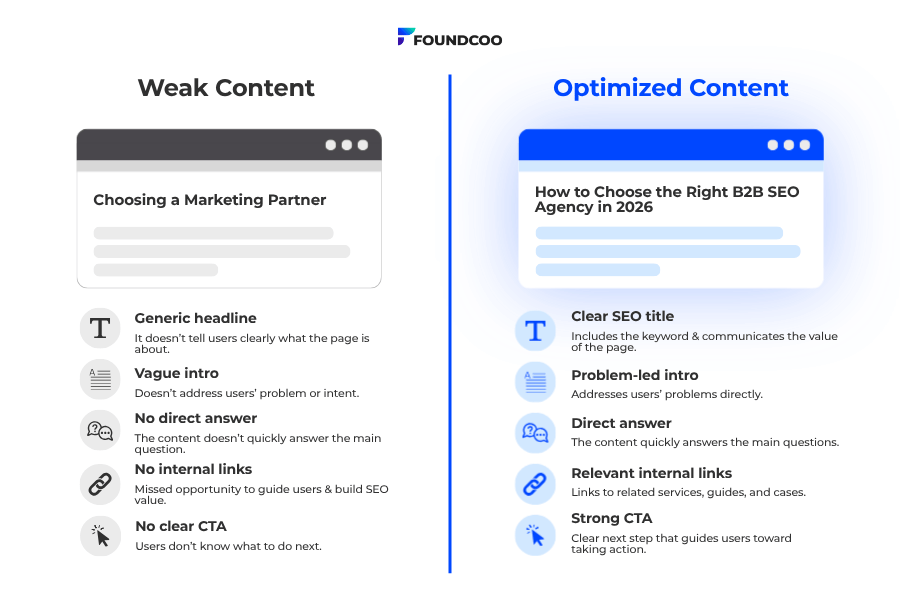
19. Write clear page titles and meta descriptions
Every important page should have a unique, useful title and meta description.
The title should make the topic clear.
The meta description should explain why someone should click.
Avoid vague titles like “Solutions” or “Services.”
Use specific titles that reflect how people search, such as:
“B2B SEO Services for Industrial Companies”
“Shopify Development for Multi-Market E-commerce”
“AI Search Visibility Strategy for B2B Brands”
Clear titles help both users and search engines understand the page.
20. Use headings that answer real questions
Your headings should guide the reader.
Instead of vague headings like “Our Approach,” use headings that answer what buyers want to know:
“How We Improve B2B SEO Visibility”
“What Makes AI Search Different from Traditional SEO?”
“When Should You Invest in CRO?”
“How Does Shopify Integration Support Regional E-commerce Growth?”
This also makes your content easier for AI tools to interpret.
21. Improve your first 100 words
The opening of a page should quickly explain what the page is about.
Do not waste the first paragraph on generic brand language.
Tell the reader:
What the page covers
Who it is for
What problem it helps solve
Why it matters now
If a human visitor needs to read three paragraphs to understand the point, AI systems may also struggle to extract the value clearly.
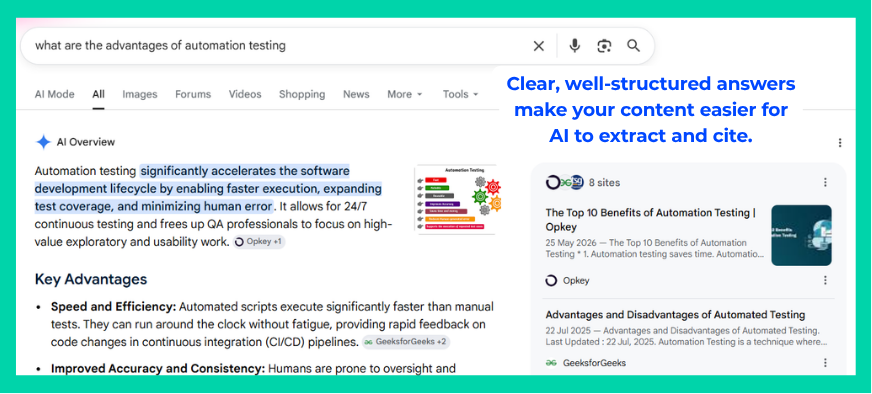
22. Add direct-answer sections
AI tools often look for concise, well-structured answers.
Add short answer sections near the top of important pages.
Example:
“What is AI search visibility?”
AI search visibility is the ability of a company to appear, be understood, and be recommended in AI-generated answers from tools such as ChatGPT, Gemini, Perplexity, Copilot, and Google AI Overviews.
This kind of direct answer helps both readers and AI systems.
23. Use internal links strategically
Internal links help users and search engines move through your website.
Link related pages together in a logical way.
For example:
An article about AI visibility should link to your SEO/GEO/AEO service page.
An e-commerce case study should link to Shopify development and e-commerce growth services.
A CRO article should link to conversion optimization services.
A LinkedIn strategy article should link to social media management or B2B lead generation content.
Internal links show how your expertise is connected.
24. Update old content regularly
An outdated article can quietly lose visibility.
Review important content every few months and update:
Statistics
Screenshots
Links
Examples
FAQs
Product references
Service descriptions
CTAs
Search intent alignment
Freshness matters, especially in fast-moving topics like AI search, SEO, e-commerce, and digital marketing.
Part 5: Build Authority Beyond Your Website
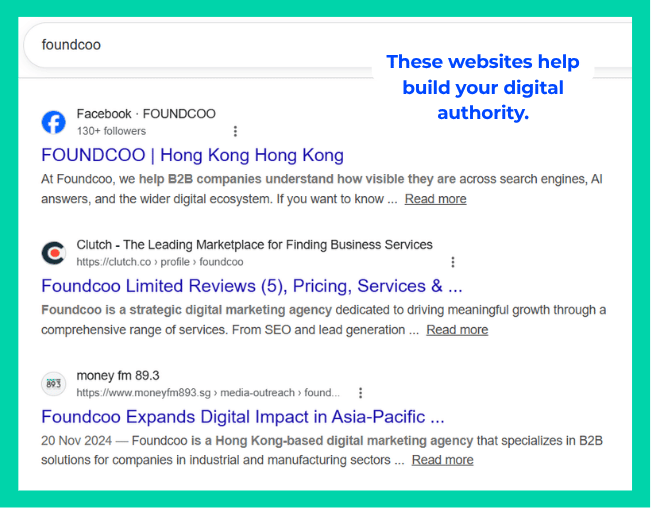
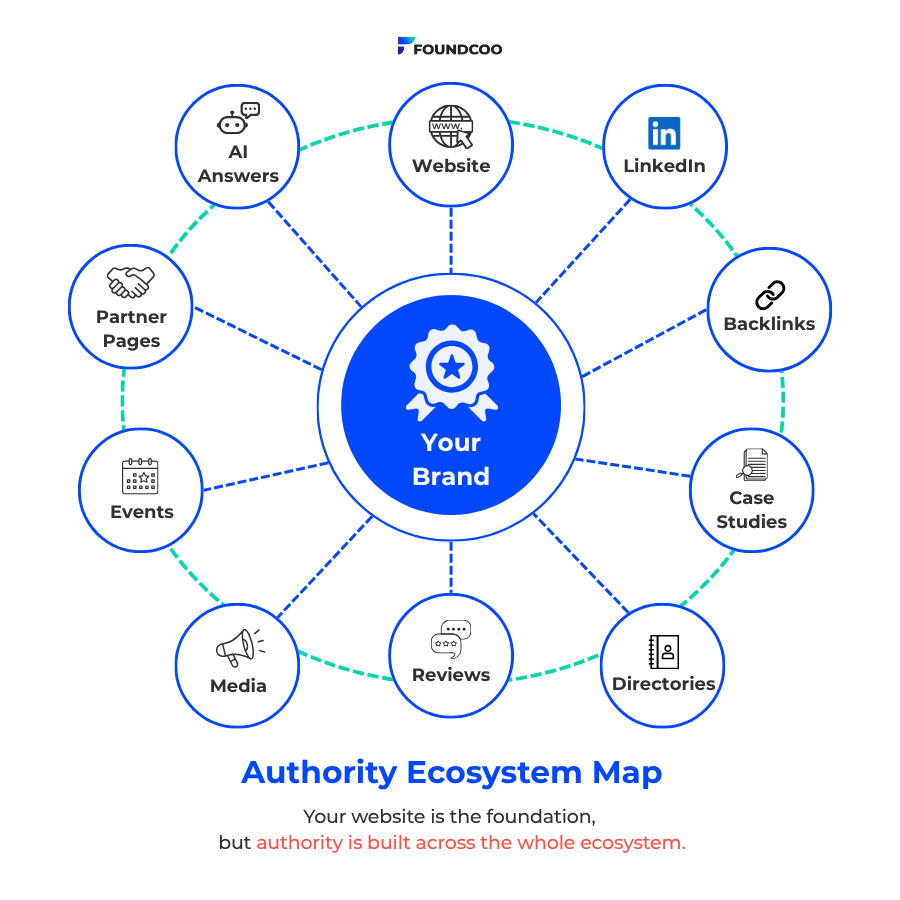
Your website is important, but it is not the only place where buyers and AI systems form an opinion about your company.
Authority is built across the wider digital ecosystem.
This includes backlinks, media mentions, LinkedIn visibility, directories, partner pages, industry reports, review platforms, and case studies.
25. Review your backlink profile
Backlinks are still important because they show that other websites reference your content.
But quality matters more than quantity.
Look for backlinks from:
Industry websites
Trade associations
Media publications
Partner websites
Client stories
Event pages
Guest articles
Research features
Avoid low-quality, spammy backlinks that do not support credibility.
26. Turn brand mentions into links
Sometimes your company is mentioned online without a link.
These mentions can appear in articles, directories, event pages, partner websites, or chamber updates.
If the mention is relevant, ask whether the publisher can add a link to your website.
This is a simple way to strengthen authority without creating new content from scratch.
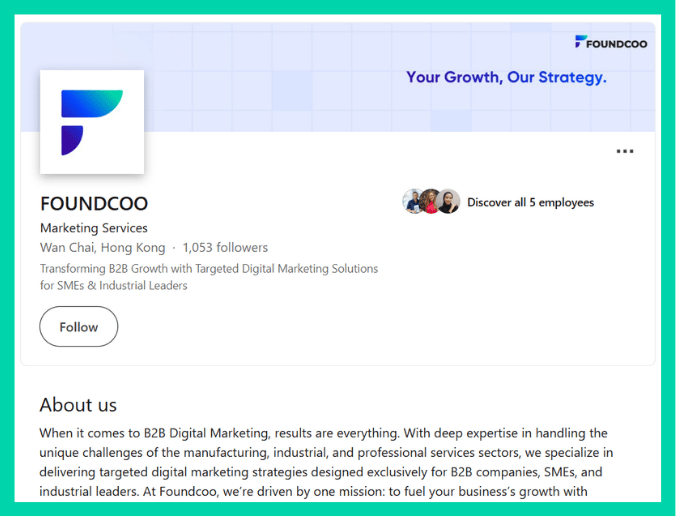
27. Strengthen your LinkedIn presence
LinkedIn is part of the modern search journey.
Before contacting a company, buyers often check the company page, founder profile, team activity, and recent posts.
For B2B companies, LinkedIn helps prove that the business is active, knowledgeable, and engaged in the market.
Publish content that explains your expertise, shares useful insights, answers buyer questions, and shows real examples of your work.
28. Publish case studies and proof points
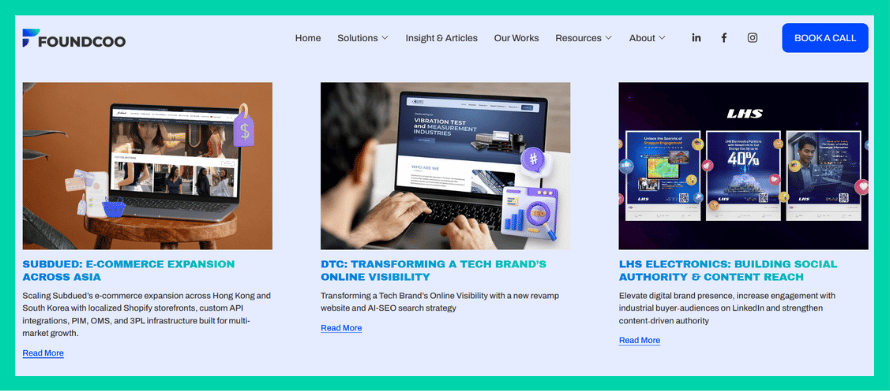
Case studies help buyers understand what you can actually do.
They are especially important for B2B, e-commerce, industrial, and professional services companies because buyers want evidence before making contact.
A good case study should include:
The client context
The challenge
The solution
The technical or strategic approach
The results
The business impact
What other companies can learn from it
Case studies are also useful for AI visibility because they provide specific, structured evidence of your expertise.
29. Keep business information consistent everywhere
Your company information should be consistent across all public sources.
Check your:
Website
Google Business Profile
LinkedIn page
Directories
Chamber listings
Partner pages
Review platforms
Media bios
Event speaker profiles
Company descriptions
Inconsistent information creates confusion.
Clear, consistent information helps buyers and AI systems understand your business more accurately.
Part 6: Optimize for AI-Driven Search
AI visibility is not a replacement for SEO.
It is the next layer of SEO.
The goal is to make your business easier for AI systems to understand, summarize, and include in relevant answers.
30. Identify the AI prompts your buyers may use
Think beyond keywords.
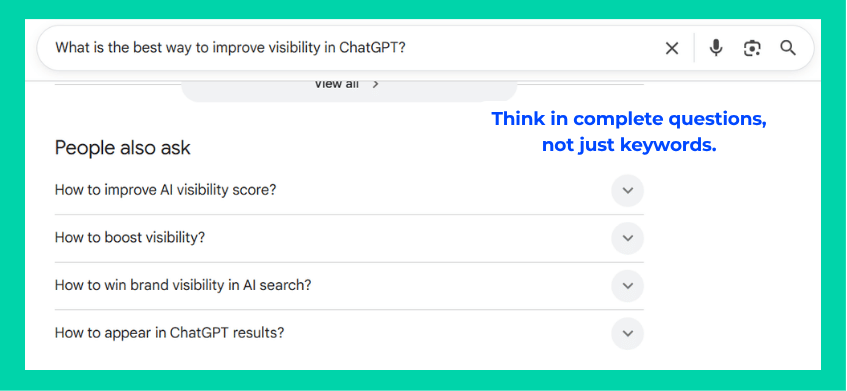
Buyers may ask AI tools questions like:
“Which companies can help with B2B SEO in Asia?”
“What should I look for in an e-commerce growth agency?”
“How do I compare digital marketing agencies?”
“What is the best way to improve visibility in ChatGPT?”
“How can an industrial company generate more qualified leads?”
“What are the signs that our website needs SEO optimization?”
These prompts should influence your content strategy.
If your website does not answer these questions clearly, AI tools may rely on other sources.
31. Structure content for easy extraction
AI tools prefer content that is clear and well organized.
Use:
Direct answers
Short definitions
Clear headings
Bullet points
Comparison tables
FAQs
Step-by-step explanations
Specific examples
Consistent terminology
Internal links to related content
Do not hide the main point inside long, vague paragraphs.
The clearer your content is, the easier it is for both humans and AI systems to understand.
32. Create comparison and decision-support content
AI tools often help users compare options.
That means businesses should create content that supports comparison and decision-making.
Examples:
“SEO vs GEO: What Is the Difference?”
“How to Choose a B2B Digital Marketing Agency”
“What to Check Before Hiring an E-commerce Development Partner”
“Google Ads vs LinkedIn Ads for B2B Lead Generation”
“AI Visibility vs Traditional SEO”
This type of content helps position your company as a useful source, not only a service provider.
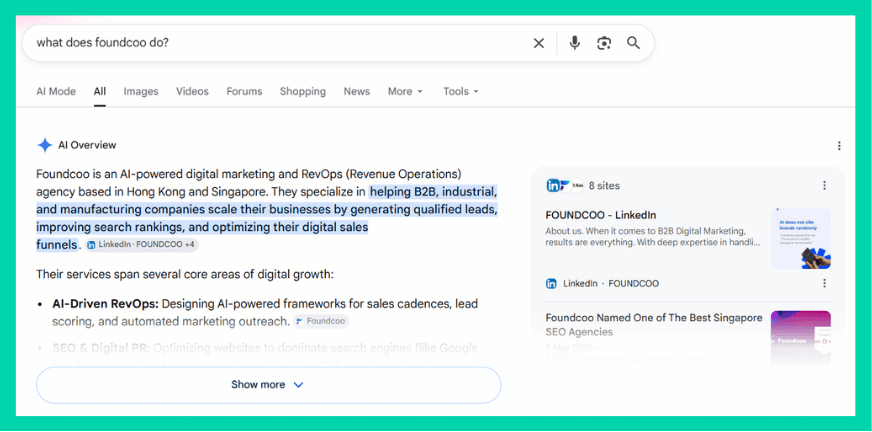
33. Monitor how AI tools describe your brand
Search for your own brand in AI tools.
Ask questions like:
“What does Foundcoo do?”
“Is Foundcoo a B2B marketing agency?”
“What services does Foundcoo provide?”
“Which companies offer AI search visibility services in Asia?”
“How does Foundcoo compare with other digital marketing agencies?”
Then check:
Are the answers accurate?
Are key services missing?
Are competitors mentioned but you are not?
Are outdated descriptions appearing?
Which sources seem to influence the answer?
This helps you identify gaps in your digital footprint.
34. Build content that supports answer engines
Answer engines do not only look for pages that mention keywords.
They look for useful, trustworthy, clear information that can be summarized.
To support AI visibility, create content that:
Defines important topics
Explains decision criteria
Answers buyer questions
Shows examples
Includes proof points
Links to related pages
Uses structured formatting
Keeps information updated
Builds third-party credibility
This is where SEO, content strategy, PR, LinkedIn, and brand authority come together.
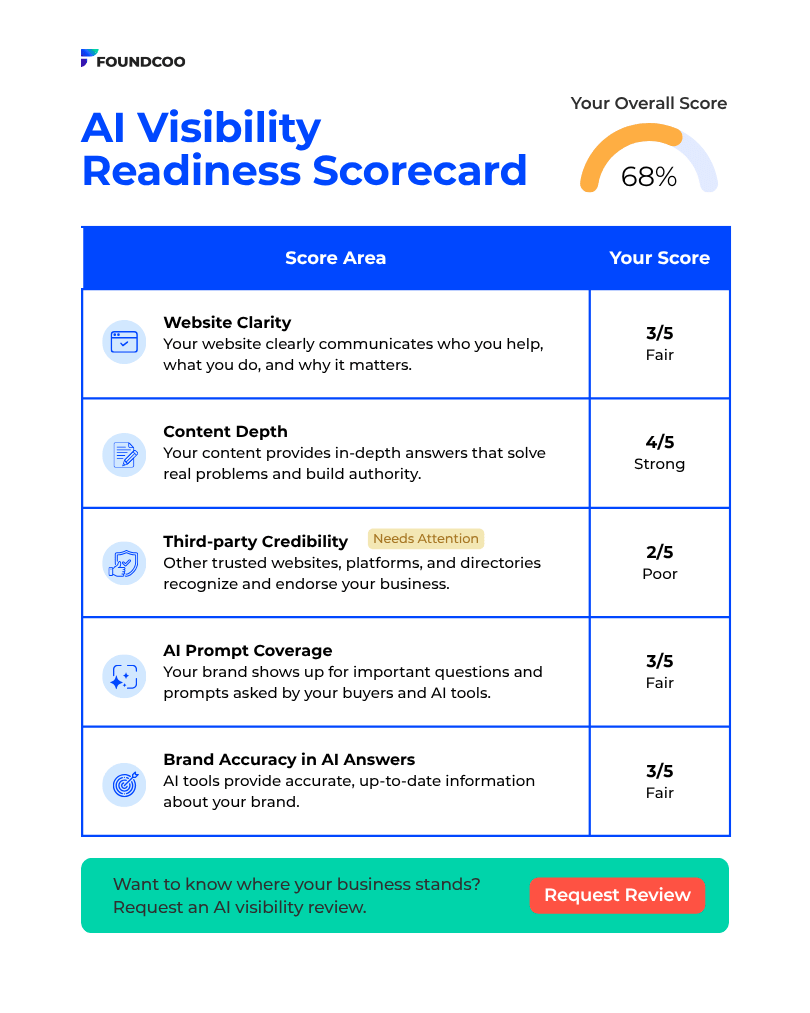
The Foundcoo Approach: SEO Built for the AI Search Era
At Foundcoo, we do not look at SEO as a standalone checklist.
We look at it as part of the full growth system.
A business needs to be found.
It needs to be understood.
It needs to be trusted.
And once the right audience lands on the website, it needs to convert.
That is why modern SEO connects with:
Website development
GEO and AEO strategy
Content optimization
Technical SEO
LinkedIn visibility
Google Ads and Microsoft Ads
CRO
E-commerce growth
Analytics
Competitor intelligence
AI-powered marketing
This is also why we built Claryx, our AI marketing intelligence platform.
Claryx helps businesses bring their marketing data into one clear view - from SEO performance and website analytics to competitor visibility, backlink insights, content gaps, social media signals, and AI-driven recommendations. Instead of guessing what to improve next, teams can understand where they stand, what competitors are doing better, and which actions should be prioritized.
For B2B companies and e-commerce brands, visibility without conversion is not enough. And traffic without the right audience is not growth.
A strong SEO strategy should help your business attract qualified buyers, answer real questions, strengthen digital authority, and turn attention into enquiries, sales, or measurable opportunities.
Foundcoo helps build the strategy and execution.
Claryx helps give the visibility, intelligence, and clarity needed to make better marketing decisions.
Quick Summary: The 34-Step SEO + AI Visibility Checklist
Use this as a practical review:
Set up Google Search Console
Set up Bing Webmaster Tools
Install GA4 and track meaningful actions
Submit a clean XML sitemap
Check your robots.txt file
Make sure your main pages are indexable
Identify your core buyer questions
Research keywords by intent
Look at competitor keyword gaps
Map keywords and prompts to the right pages
Study the search results before creating content
Collect questions from sales conversations
Use HTTPS across the whole website
Fix duplicate domain versions
Improve speed and Core Web Vitals
Fix broken links and redirects
Make your website mobile-friendly
Add structured data where useful
Write clear page titles and meta descriptions
Use headings that answer real questions
Improve your first 100 words
Add direct-answer sections
Use internal links strategically
Update old content regularly
Review your backlink profile
Turn brand mentions into links
Strengthen your LinkedIn presence
Publish case studies and proof points
Keep business information consistent everywhere
Identify AI prompts your buyers may use
Structure content for easy extraction
Create comparison and decision-support content
Monitor how AI tools describe your brand
Build content that supports answer engines

Final Thought
SEO is not dead.
But the job of SEO has changed.
Today, businesses need to be visible across Google, AI Overviews, ChatGPT, LinkedIn, directories, third-party sources, and every place where buyers research before making contact.
The companies that win will not be the ones publishing the most content.
They will be the ones that communicate most clearly, answer buyer questions better, build stronger authority, and make it easier for both people and AI systems to understand why they matter.
If you are not sure whether your website is ready for AI-driven search, Foundcoo can help you identify what is missing, what needs fixing, and what actions will create the biggest visibility impact first.
Ready to understand where your business stands?
Book a digital growth strategy session with Foundcoo and let’s review your SEO, AI visibility, content gaps, and conversion opportunities.
FAQ: SEO and AI Visibility Checklist
-
An SEO checklist is a structured list of actions that help improve a website’s visibility in search engines. It usually covers technical SEO, keyword research, content optimization, internal links, backlinks, analytics, and performance tracking.
-
Yes. SEO is still important, but its role is expanding. Businesses now need to optimize for both traditional search engines and AI-driven search experiences such as Google AI Overviews, ChatGPT, Gemini, Perplexity, and Copilot.
-
AI visibility is the ability of your business, brand, website, or content to appear in AI-generated answers when people ask questions related to your industry, services, products, or expertise.
-
To optimize for AI search, create clear and structured content, answer real buyer questions, use direct-answer sections, add FAQs, keep business information consistent, build third-party credibility, and make sure your website is technically healthy and crawlable.
-
SEO focuses on improving visibility in search engines. AEO, or Answer Engine Optimization, focuses on helping content appear in direct answers. GEO, or Generative Engine Optimization, focuses on making content easier for AI tools to understand, summarize, and reference.
-
Technical SEO helps search engines crawl, index, and understand your website. If your website is slow, broken, blocked from indexing, not mobile-friendly, or poorly structured, your content may struggle to rank or appear in AI-driven search results.
-
You should review your SEO checklist at least every quarter. For fast-moving areas like AI search, Google AI Overviews, and content visibility, monthly reviews are better, especially for key pages and high-value topics.
-
Foundcoo helps businesses improve SEO, AI visibility, content strategy, technical performance, conversion paths, and digital authority. We identify what is missing, prioritize what matters most, and help your website become easier to find, understand, and trust.
Want to understand how your brand appears in AI-driven search and recommendations? Let’s review it together.
Foundcoo helps B2B and industrial brands measure, improve, and sustain visibility across AI-driven search platforms beyond rankings and one-off snapshots.
If you want clarity instead of guesswork, let’s talk.