“Comment to Get” Is Everywhere. But Is It a Real Strategy?
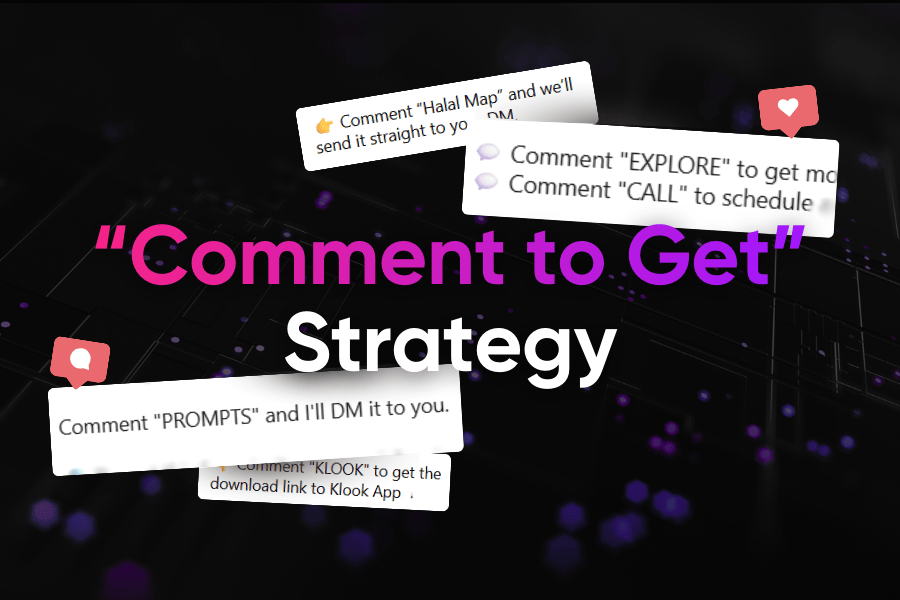
For the past few months, one LinkedIn tactic has spread faster than almost any other:
“Comment strategy and I’ll DM you the framework.”
“Drop a 🔥 to get the playbook.”
“Comment yes and I’ll send the guide.”
On the surface, it works.
Posts get more comments. Reach increases. Visibility spikes.
But for many B2B, industrial, and SaaS brands, there’s a growing discomfort behind the numbers:
Is this actually building demand or just triggering the algorithm?
This article breaks down where the “comment to get” tactic comes from, why it works short-term, where it quietly fails in B2B contexts, and what a more sustainable AI-era visibility strategy looks like instead.
Short Executive Summary
The “comment to get” tactic has become widespread on LinkedIn because it boosts short-term engagement. However, for B2B and industrial brands, it often creates visibility without intent and fails to build trust or long-term demand.
AI-driven search and discovery systems do not reward engagement tricks. They surface brands that explain complex topics clearly, address real-world constraints, and demonstrate consistent expertise across sources.
As buyer behavior and AI visibility evolve, sustainable growth comes from understanding-first content—not engagement mechanics. Brands that shift from algorithm-driven tactics to clarity-driven communication build stronger credibility, better AI visibility, and more durable demand.
Why the “Comment to Get” Tactic Took Off
The rise of this tactic isn’t accidental. It’s a direct response to how LinkedIn distributes content.
LinkedIn prioritizes:
Comments over likes
Conversations over clicks
On-platform interaction over outbound traffic
Marketers noticed this and optimized accordingly.
By asking people to comment, posts:
Signal high engagement
Gain extended reach beyond the first network
Stay visible longer in feeds
From a purely algorithmic standpoint, it’s logical.
But algorithms don’t buy products.
People do.
Why “Comment to Get” Feels Off in B2B and Industrial Markets
In consumer or creator-driven spaces, frictionless engagement is expected. Low commitment. Fast rewards.
B2B and especially industrial or technical markets operate very differently.
Through audits across manufacturing, energy, infrastructure, and B2B SaaS brands, we repeatedly see the same issues when this tactic is overused.
1. Engagement without intent
Many comments come from:
Curiosity-driven users
Other marketers
People gaming engagement themselves
The post looks successful, but downstream metrics tell a different story:
Few qualified conversations
Low reply rates in DMs
Minimal impact on pipeline
Visibility increases. Demand does not.
2. Friction in the wrong place
For senior buyers, public commenting can feel:
Performative
Manipulative
Unnecessary
Decision-makers often prefer:
Quiet research
Direct access to information
Control over how and when they engage
Forcing a comment to unlock value can unintentionally filter out the right audience.
3. The brand becomes the mechanic, not the message
Ask yourself this:
After seeing five “comment to get” posts, what do you remember?
The insight or the instruction?
In many cases, the tactic becomes more memorable than the expertise behind it.
Why This Matters More in the AI Search Era
This isn’t just a LinkedIn issue.
AI-driven search and discovery systems used in Google AI Overviews, AI chat tools, and internal research workflows are changing how visibility works.
AI systems:
Do not see comments as credibility
Do not reward engagement tricks
Do not value gated explanations
They reference brands that explain things clearly and consistently, not those that trigger interaction loops.
A post that performs well on LinkedIn may contribute nothing to long-term AI visibility if:
The insight isn’t clearly articulated
The explanation isn’t accessible without friction
The expertise isn’t visible in plain language
What Actually Works Better (With Examples)
The most effective B2B brands are shifting away from engagement mechanics and toward explanatory visibility.
Example 1: Industrial equipment brand
Instead of:
“Comment ‘guide’ to get our vibration testing checklist”
They publish:
A post explaining why vibration tests fail in real environments
A breakdown of trade-offs, constraints, and real-world conditions
A link to a deeper resource for those who want more
Result:
Fewer comments
More qualified site visits
Higher relevance in AI-generated explanations
Example 2: B2B SaaS company
Instead of teasing a framework, they:
Share the core logic directly in the post
Explain when the framework doesn’t apply
Invite conversation without gating information
Result:
Lower vanity engagement
Higher trust
More consistent appearance in AI summaries and buyer research
A Better Mental Model for Visibility
The key shift is this:
From engagement-first visibility → understanding-first visibility
Better questions to ask today:
Are we being referenced across related AI prompts?
Do we appear as an explainer, not just a mention?
Is our content understandable without context or persuasion?
AI and buyers reward the same thing: clarity over cleverness.
Is “Comment to Get” Ever Useful?
Yes, but tactically, not strategically.
It can make sense when:
The audience expects light interaction
The content is low-risk and non-technical
The goal is short-term reach, not long-term authority
It breaks down when:
Trust and credibility matter
The buying cycle is long
The audience values discretion and depth
Used occasionally, it’s a tool.
Used as a strategy, it becomes a liability.
Final Takeaway
“Comment to get” optimizes for the platform.
But B2B growth optimizes for:
Trust
Understanding
Consistent presence across decision moments
In an AI-driven landscape, visibility isn’t about being loud or clever.
It’s about being useful before you’re asked.
At Foundcoo, we help B2B and industrial brands shift from engagement tricks to durable visibility across LinkedIn, search, and AI-driven discovery.
If your content looks successful but feels disconnected from real demand, that gap isn’t imaginary.
It’s structural.
FAQ: Comment to Get
-
The “comment to get” tactic can increase short-term visibility on LinkedIn, but it is not a reliable long-term strategy for B2B marketing. In complex buying cycles, it often generates engagement without intent and does not consistently translate into qualified leads or revenue.
-
Industrial and technical buyers value clarity, discretion, and depth. Requiring public comments to access information can create unnecessary friction and discourage senior decision-makers who prefer direct, private research.
-
Not directly. AI-driven systems do not measure comments or likes as credibility signals. They prioritize clear explanations, structured content, and consistent expertise across multiple sources rather than social engagement metrics.
-
AI systems assemble answers based on clarity, relevance, and explanatory depth. Brands that clearly explain concepts, trade-offs, and real-world constraints are more likely to be referenced consistently across AI-generated answers.
-
No. It can be useful for short-term campaigns, creator-led audiences, or low-risk educational content. However, it should be treated as a tactical tool—not a core B2B growth strategy.
-
Publishing clear, ungated insights directly in posts and articles works better. Offering optional deeper resources allows interested buyers to self-select without forcing engagement mechanics.
-
Instead of tracking rankings or comments, B2B brands should measure how often they are referenced across related AI prompts, the role they play (explainer, example, recommendation), and their consistency within a topic space.
Want to understand how your brand appears in AI-driven search and recommendations? Let’s review it together.
Foundcoo helps B2B and industrial brands measure, improve, and sustain visibility across AI-driven search platforms beyond rankings and one-off snapshots.
If you want clarity instead of guesswork, let’s talk.