Email Cadence and Frequency Best Practices 2026
Email Cadence and Frequency Best Practices (2026 Guide for B2B & Tech)
Email remains one of the most dependable digital channels for B2B organisations, technical companies, and SMEs. But success today isn’t about just sending messages — it’s about sending the right message, at the right frequency, to the right people.
In this guide, we explore how often businesses send emails, how frequency affects performance metrics like open rate, click rate, and unsubscribe rate and how you can use these insights to shape better email strategies. Benchmark data and patterns are based on analysis of millions of campaigns.
What is Email Cadence vs. Email Frequency?
Email frequency is how often you send campaigns — daily, weekly, monthly.
Email cadence is the rhythm you use — timing, spacing, and sequencing, across subscriber segments and lifecycle stages.
Cadence is strategic. It helps build trust, relevance, and expectation. Frequency alone can overwhelm subscribers or leave them disengaged.
To find out how email cadence impacts engagement, let’s see how frequently businesses send emails, average open and click rates, industry-specific email benchmarks, and regional sending patterns and engagement levels.
How Often Do Businesses Send Emails?
Data from MailerLite shows that businesses experiment with varied pacing depending on their audience and goals:
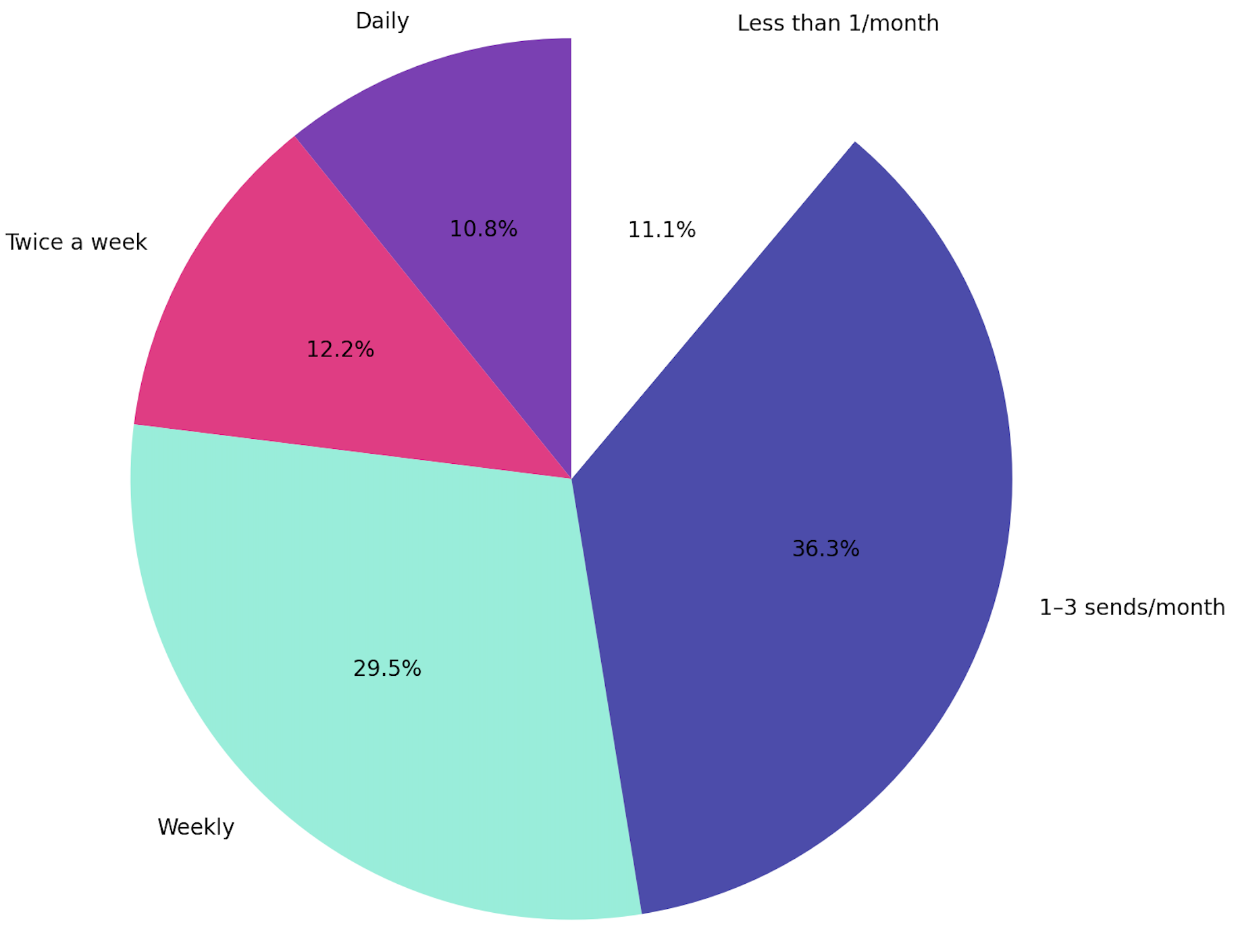
Email Sending Frequency
36.3% of businesses send between 1 and 3 emails per month
29.5% of businesses send emails every week
12.2% of businesses send two emails per week
11.1% of businesses send less than one email campaign per month
10.8% of businesses send emails every day
Typical Sending Patterns (derived from benchmark behaviours):
Some brands send weekly newsletters.
Others with high product turnover might email multiple times per week.
Seasonal communications often result in daily sends around key events.
These patterns reflect differences in content volume, audience expectations, and business maturity.
Performance by Sending Frequency
Open Rate by Frequency
Higher open rates don’t always come from more sends — relevance and timing matter.
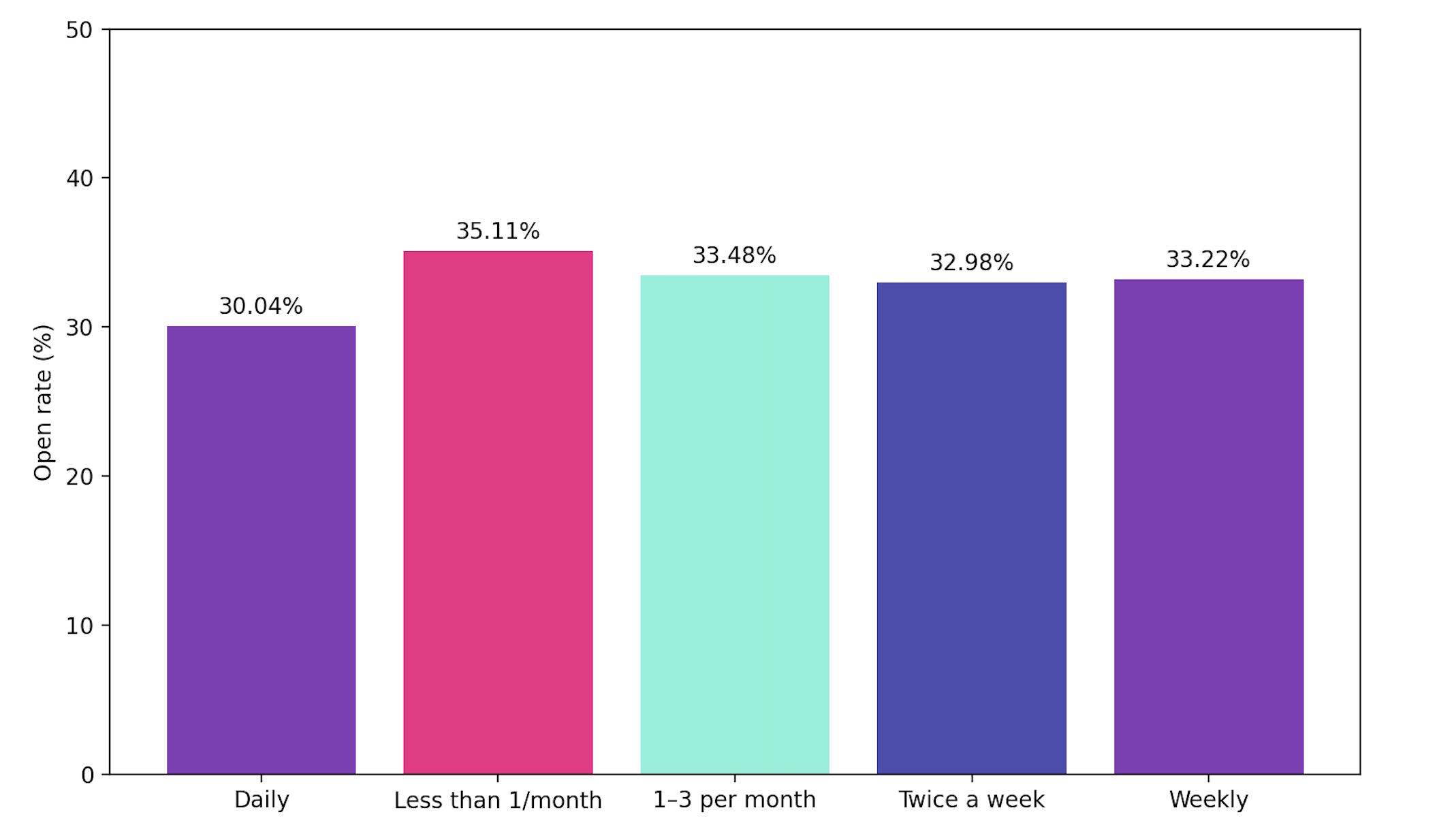
Email Open Rate by Sending Frequency
Businesses that send fewer than 1 email per month have an average open rate of 35.11%
Businesses that send 1 to 3 emails per month have an average open rate of 33.48%
Businesses that send 1 email per week have an average open rate of 33.22%
Businesses that send 2 emails per week have an average open rate of 32.98%
Businesses that send daily emails have an average open rate of 30.04%
Insight: B2B audiences often prefer consistent but not intrusive frequencies (e.g., weekly or bi-weekly).
Click Rate by Sending Frequency
Click rates measure deeper engagement — not just opens.
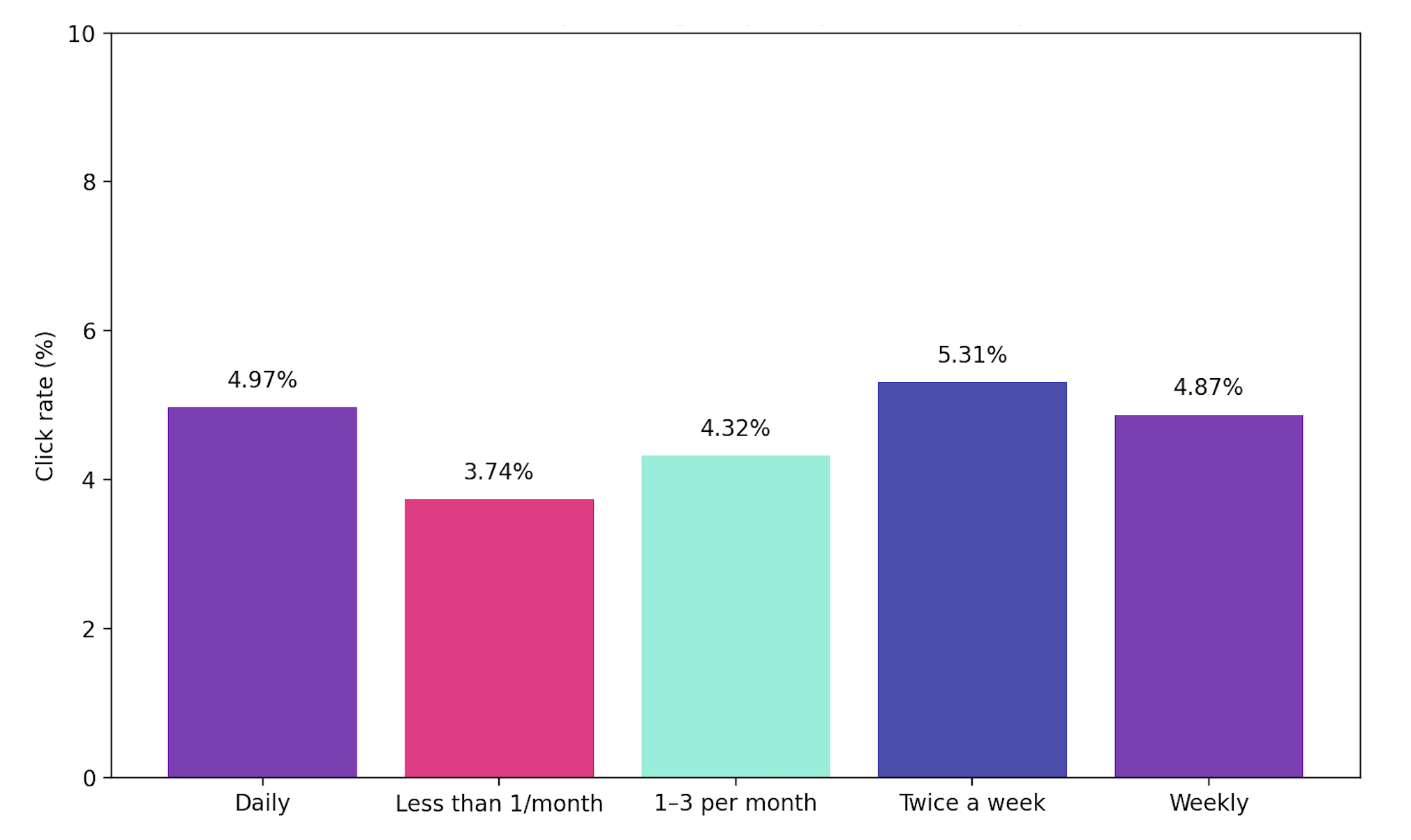
Email Click Rate by Sending Frequency
Businesses that send 2 emails per week have an average click rate of 5.31%
Businesses that send daily emails have an average click rate of 4.97%
Businesses that send 1 email per week have an average click rate of 4.87%
Businesses that send 1 to 3 emails per month have an average click rate of 4.32%
Businesses that send fewer than 1 email per month have an average click rate of 3.74%
Click performance tends to improve when content is closely aligned to audience interests and structured around useful next steps.
Unsubscribe Rate by Frequency
Too many emails without value lead to higher unsubscribes.
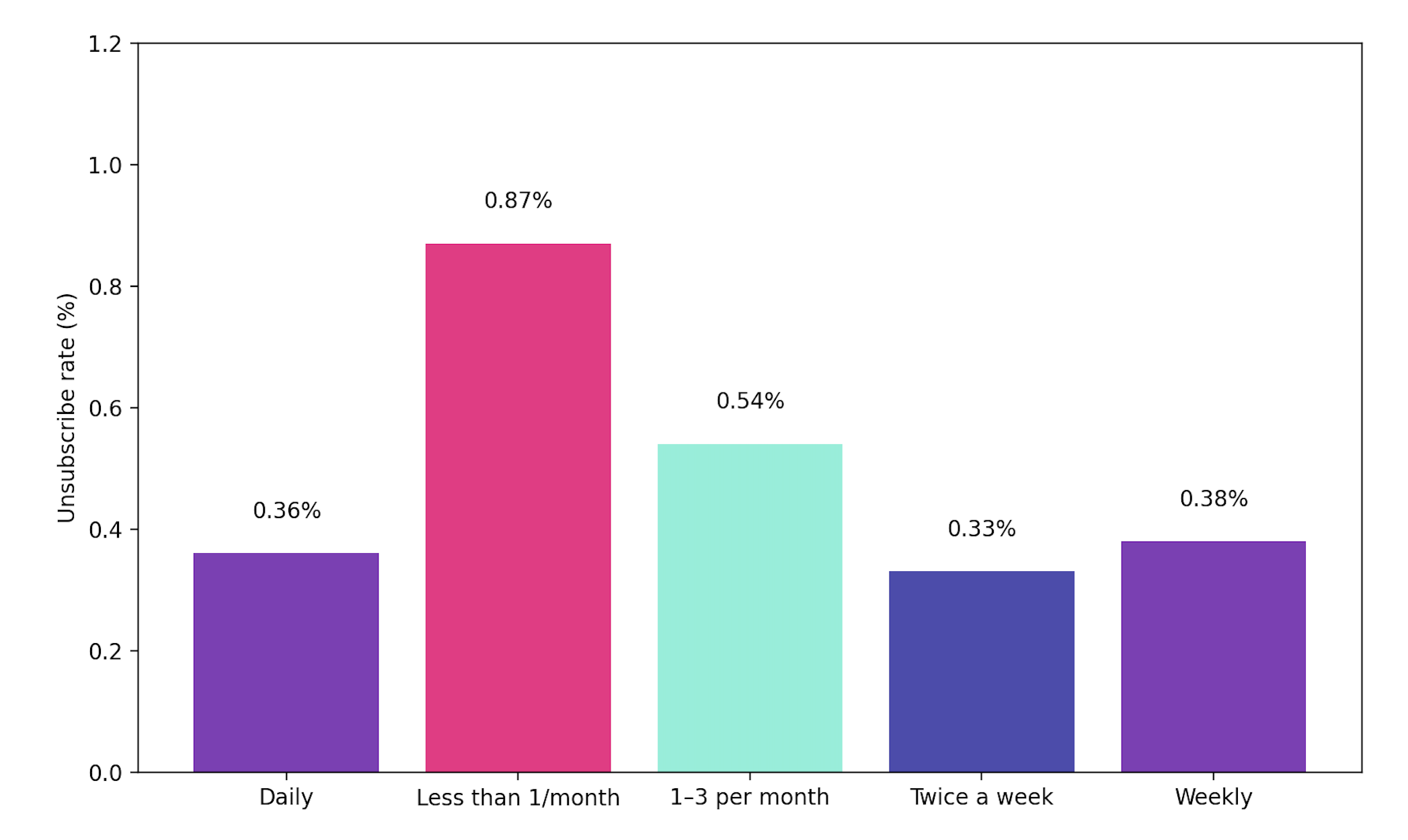
Email Unsubscribe Rate by Frequency
Businesses that send fewer than 1 email per month have an unsubscribe rate of 0.87%
Businesses that send 1 to 3 emails per month have an unsubscribe rate of 0.54%
Businesses that send 1 email per week have an unsubscribe rate of 0.38%
Businesses that send daily emails have an unsubscribe rate of 0.36%
Businesses that send 2 emails per week have an unsubscribe rate of 0.33%
A healthy unsubscribe benchmark is typically below ~0.2–0.3%, indicating that your list remains receptive and relevant.
How Email Performance Varies by Industry
Email sending frequency for entrepreneurs and SMBs
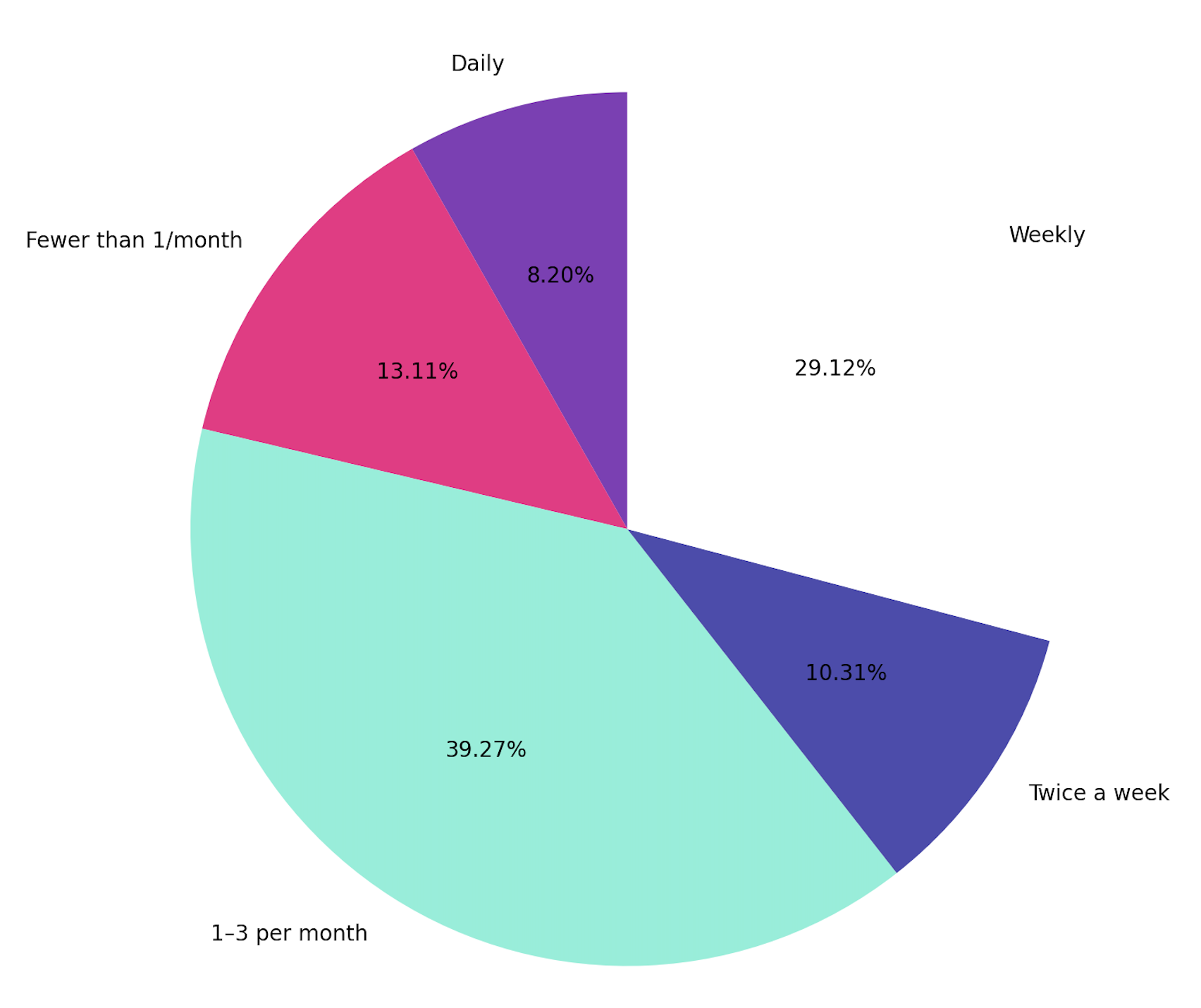
Email sending frequency for entrepreneurs and SMBs
39.27% of entrepreneurs and SMBs send between 1 and 3 emails per month, the most common sending cadence for this industry
29.12% of entrepreneurs and SMBs send 1 email every week
13.11% of entrepreneurs and SMBs send fewer than 1 email per month
10.31% of entrepreneurs and SMBs send 2 emails per week
8.20% of entrepreneurs and SMBs send daily emails
Email sending frequency for creators
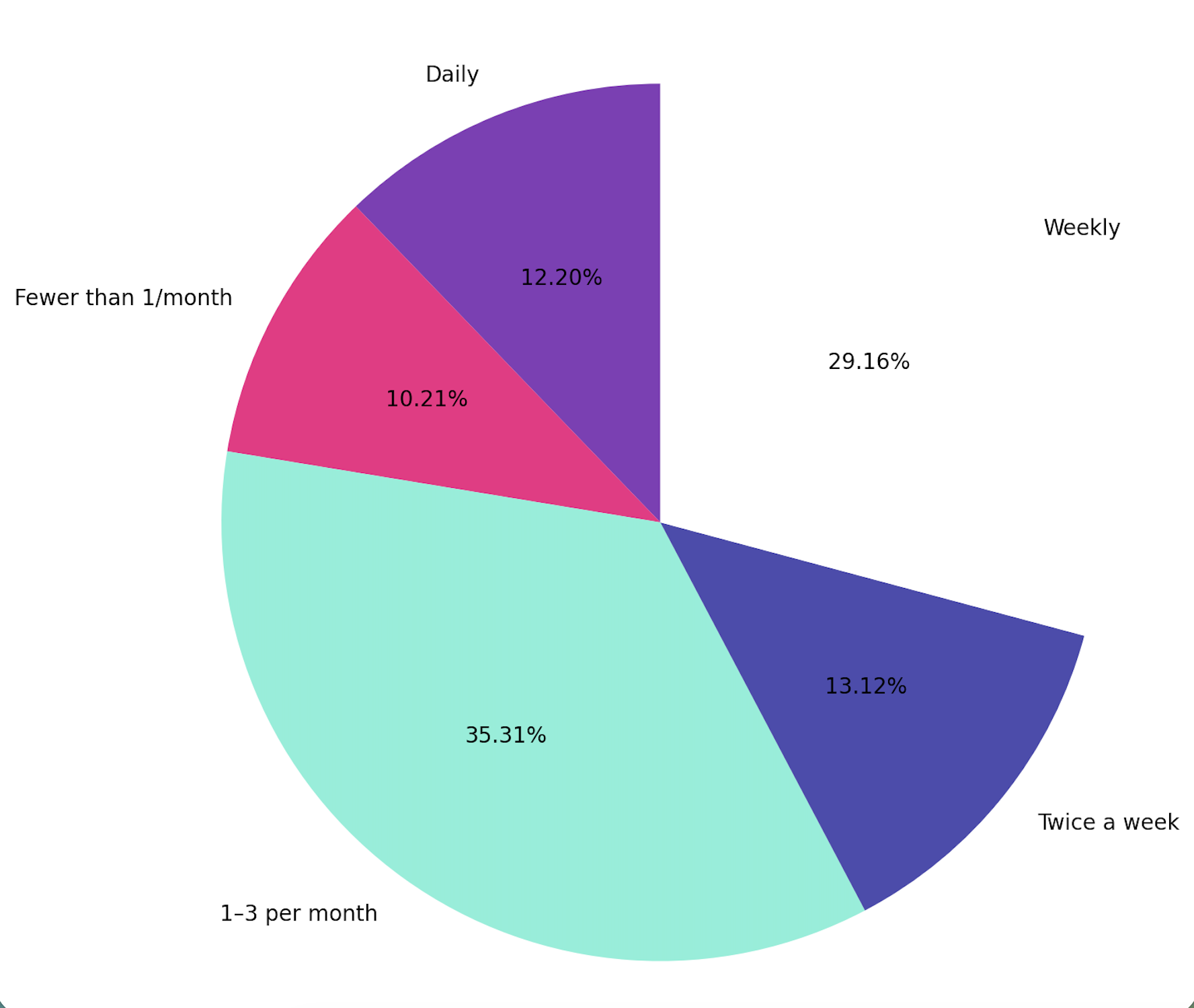
Email sending frequency for creators
35.31% of creators send between 1 and 3 emails per month, the most common sending cadence for this industry
29.16% of creators send 1 email every week
13.12% of creators send 2 emails per week
12.20% of creators send emails daily
10.21% of creators send fewer than 1 email per month
Email sending frequency for institutions
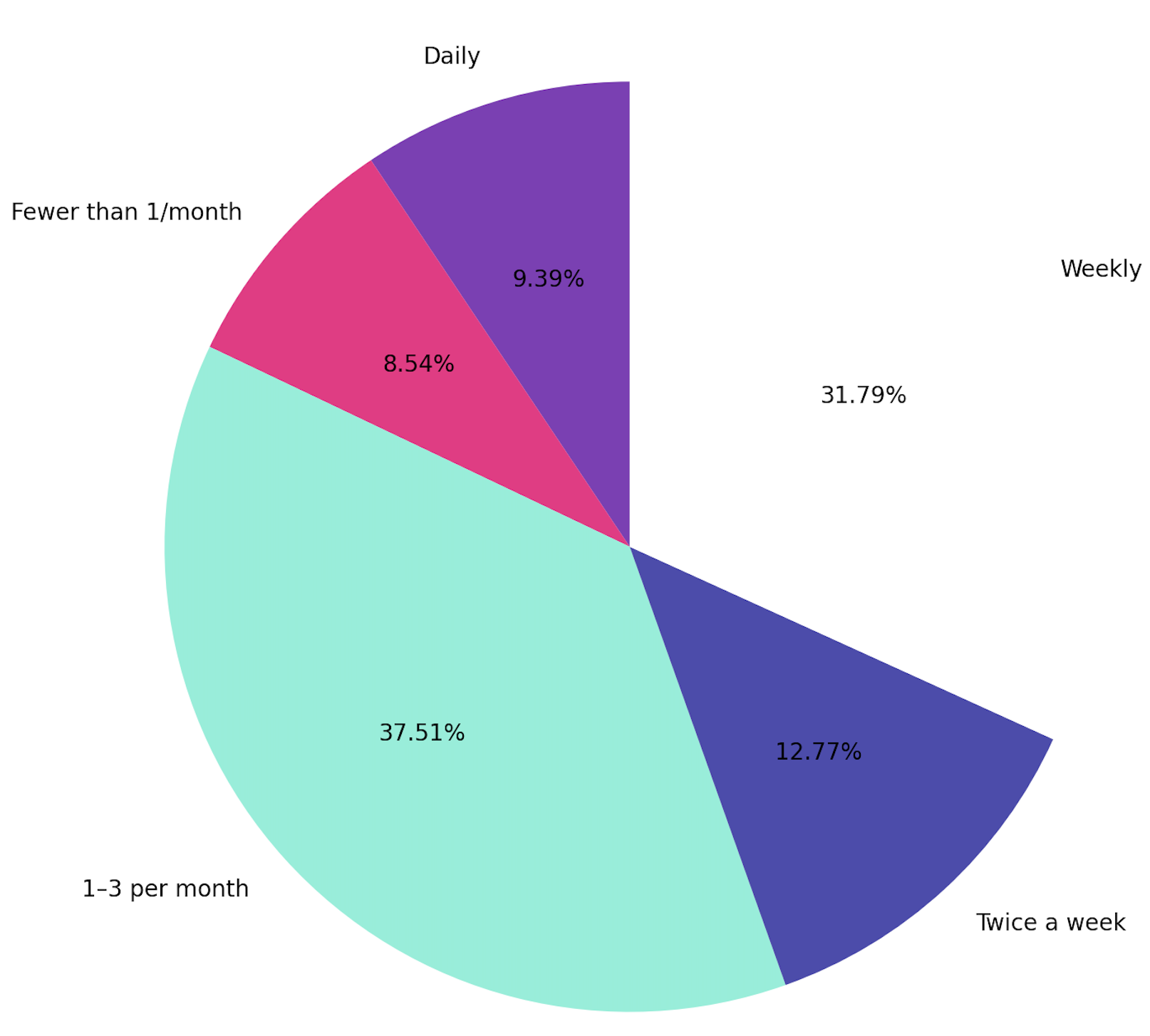
Email sending frequency for institutions
37.51% of institutions send between 1 and 3 emails per month, the most common sending cadence for this industry
31.79% of institutions send 1 email every week
12.77% of institutions send 2 emails per week or more
9.39% of institutions send email daily
8.54% of institutions send fewer than 1 email per month
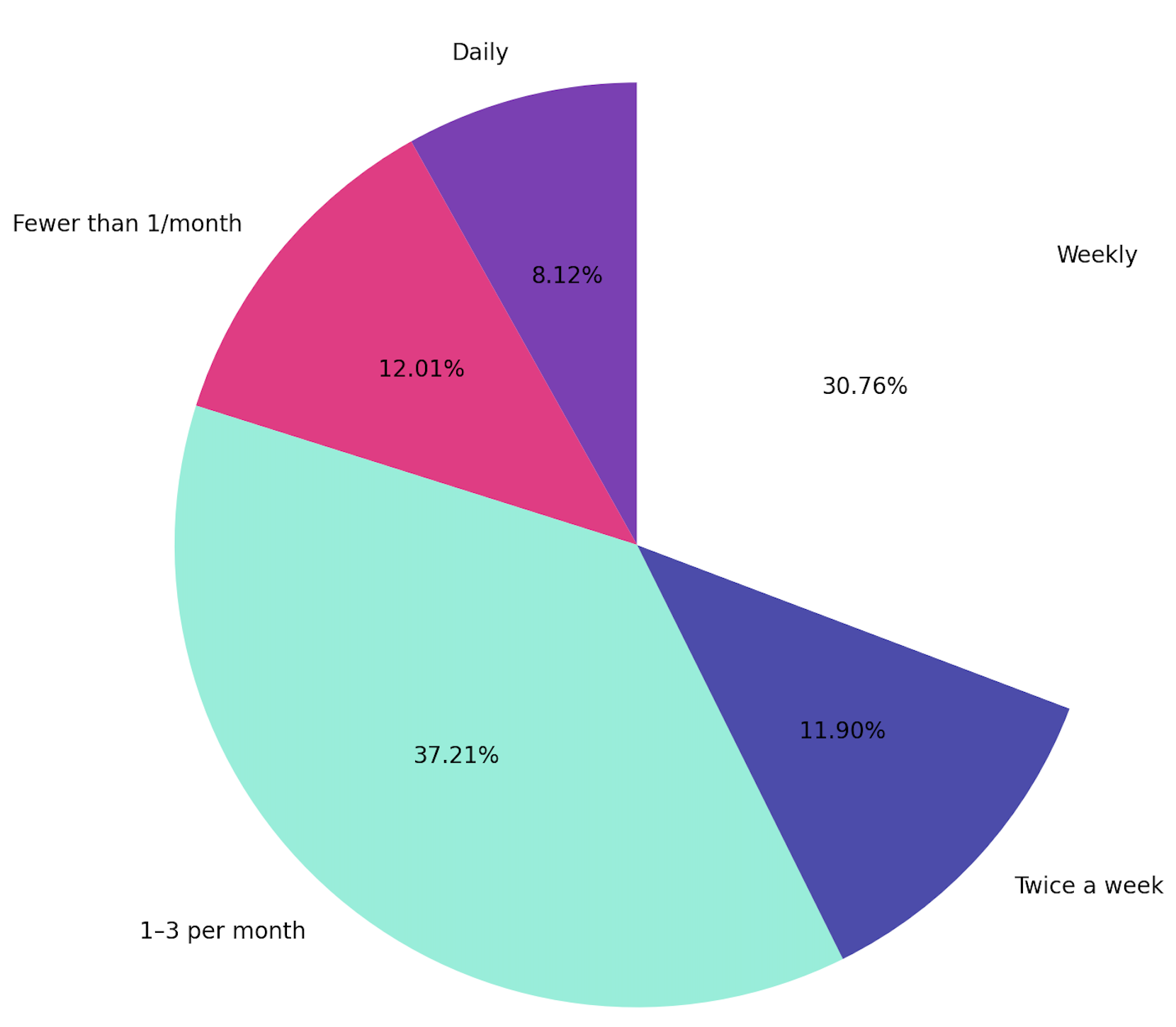
Email sending frequency for e-commerce
Email sending frequency for e-commerce
37.21% of e-commerce businesses send between 1 and 3 emails per month, the most common sending cadence for this industry
30.76% of e-commerce businesses send 1 email every week
12.01% of e-commerce businesses send fewer than 1 email per month
11.90% of e-commerce businesses send 2 emails per week
8.12% of e-commerce businesses send daily email
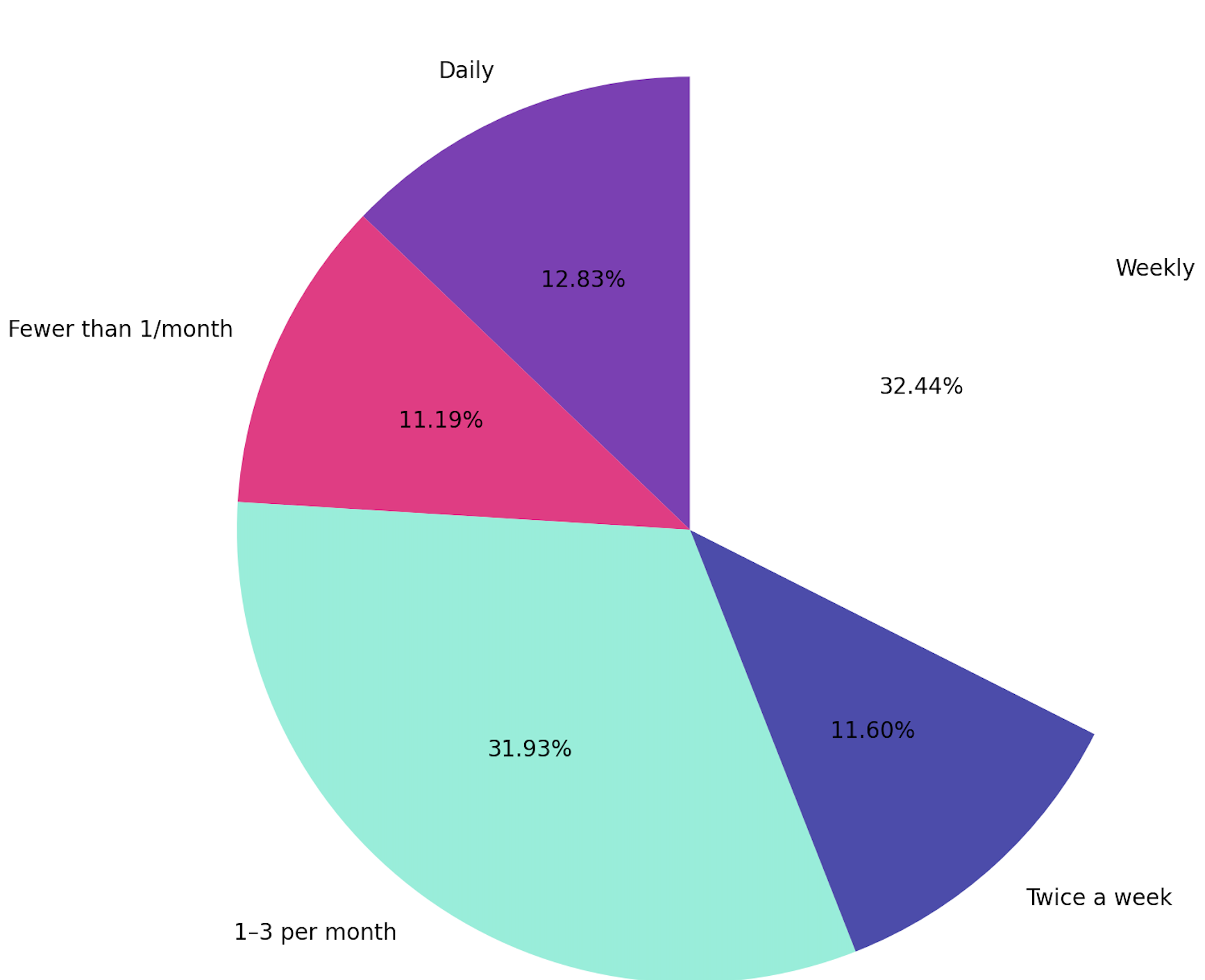
Email sending frequency for agencies
Email sending frequency for agencies
31.93% of agencies send between 1 and 3 emails per month, the most common sending cadence for this industry
32.44% of agencies send 1 email every week
12.83% of agencies send daily email
11.60% of agencies send 2 emails per week
11.19% of agencies send fewer than 1 email per month
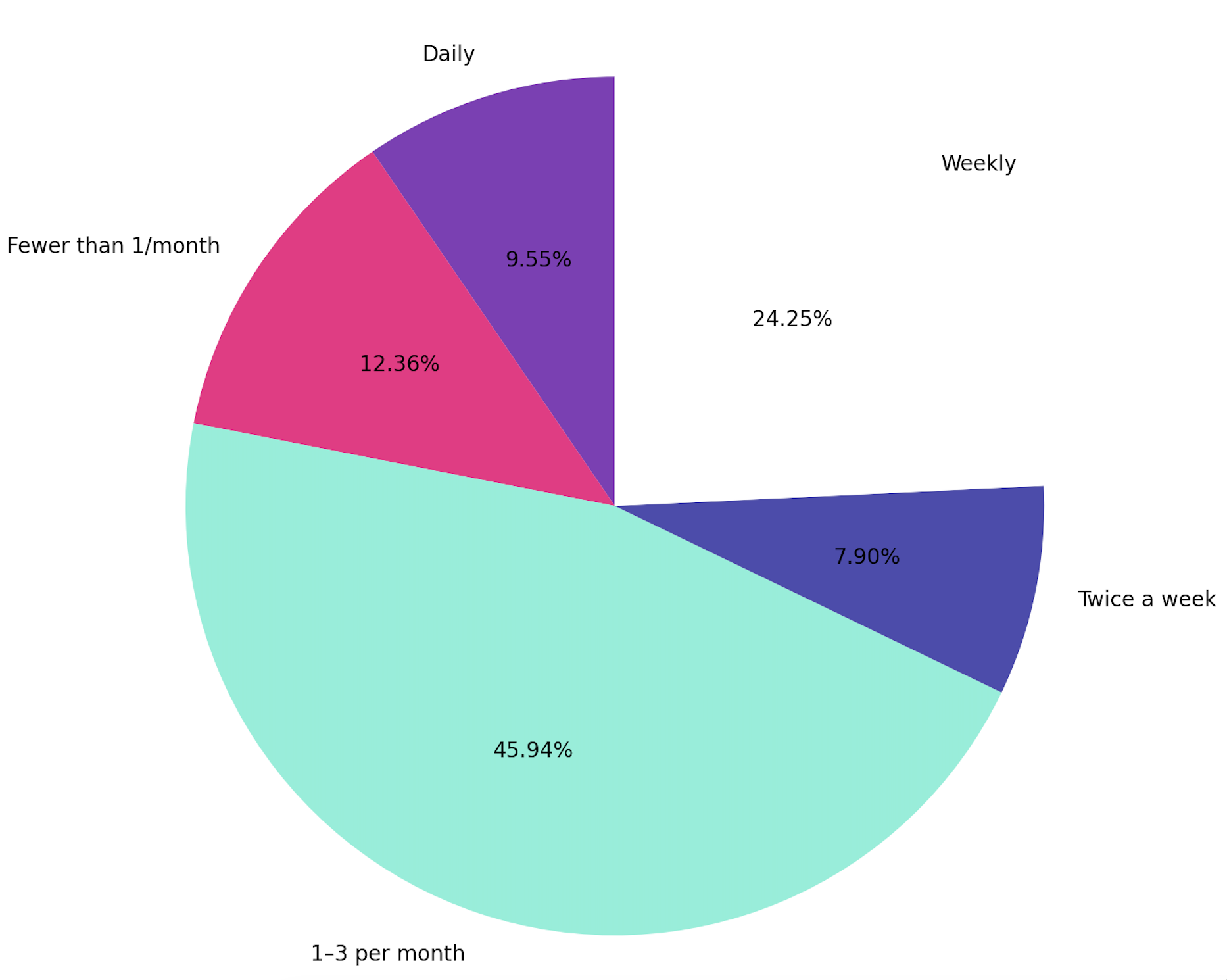
Email sending frequency for authors
Email sending frequency for authors
45.94% of authors send between 1 and 3 emails per month, the most common sending cadence for this industry
24.25% of authors send 1 email every week
12.36% of authors send fewer than 1 email per month
9.55% of authors send daily email
7.90% of authors send 2 emails per week
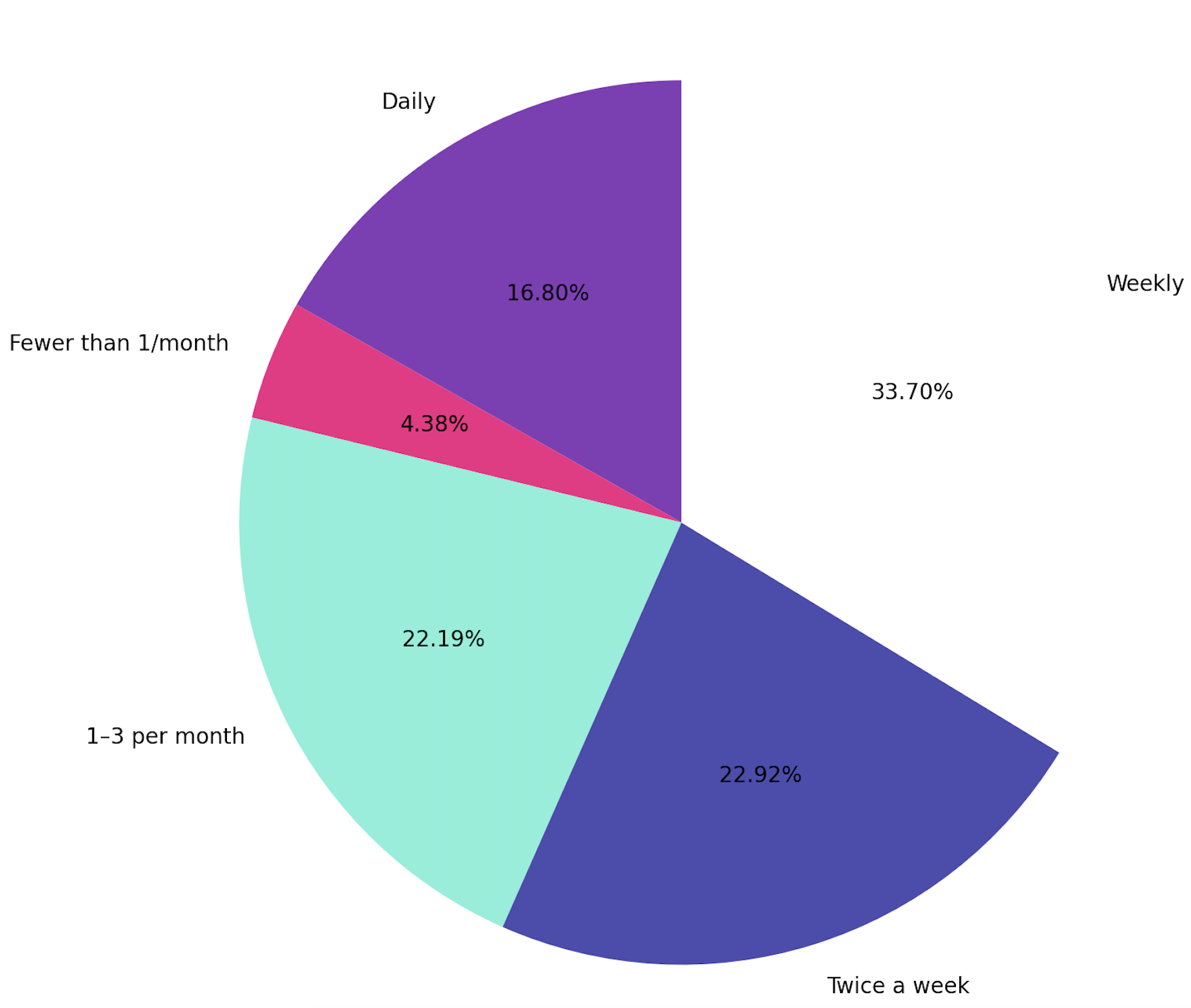
Email sending frequency for online course creators
Email sending frequency for online course creators
33.70% of online course creators send 1 email every week, the most common sending cadence for this industry
22.92% of online course creators send 2 emails per week
22.19% of online course creators send between 1 and 3 emails per month
16.80% of online course creators send daily emails
4.38% of online course creators send fewer than 1 email per month
Email sending frequency for software and web app businesses

Email sending frequency for software and web app businesses
39.21% of software and web app businesses send between 1 and 3 emails per month, the most common sending cadence for this industry
30.09% of software and web app businesses send 1 email every week
13.07% of software and web app businesses send fewer than 1 email per month
9.21% of software and web app businesses send 2 emails per week
8.42% of software and web app businesses send daily emails
How Email Performance Varies by Region
Different regions behave differently. Based on MailerLite data:
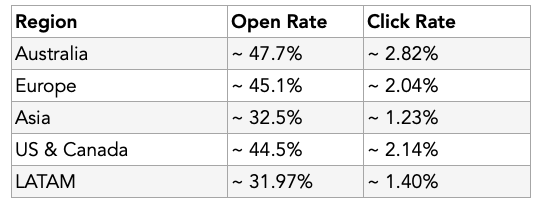
These patterns illustrate how cultural and platform habits shape engagement — a key insight for geo-aware campaigns.
So, how often should you really be sending emails?
Based on the data, a good range sits between once a month and twice a week. At this pace, brands tend to see strong open and click rates without pushing unsubscribe numbers up. It also keeps you visible to your audience without crowding their inbox.
Sending less than once a month might look appealing at first. Open rates are often higher at this frequency. But there’s a downside.
Businesses that email this rarely usually see:
fewer clicks
more unsubscribes
weaker engagement over time
And they miss out on what email is good at in the first place — building relationships, driving action, and staying top of mind.
That said, there’s no single “perfect” schedule for everyone.
Your ideal cadence depends on more than just averages and benchmarks.
Let’s look at the other factors that should shape your decision.
Cadence Best Practices That Work in 2026
Start With Clear Goals
Before adjusting frequency, define what each sequence should achieve — awareness, nurture, conversion, or re-engagement.
Align With Audience Expectations
Expectations matter more than a specific schedule. If subscribers expect weekly insights, follow that pace. Sudden shifts without testing can harm engagement.
Use Benchmarks, But Test Constantly
Benchmarks show patterns, not rules. A campaign that outperforms a weekly average might benefit from more or fewer sends depending on how your audience responds.
Time of Day Still Matters
Across industries, engagement metrics vary by when you send — mornings often see higher opens, while evenings might see better clicks. Testing remains essential to find audience-specific windows.
Segment and Personalise Your Cadence
One size rarely fits all. Segment by buyer intent, lifecycle stage, or past engagement behaviours. Personalised cadences deliver value and reduce fatigue. Automation tools that adapt frequency based on engagement patterns can improve results.
Real Examples of Effective Cadences
Welcome series: 3-5 emails in two weeks for new leads.
Weekly digest: One high-value newsletter per week.
Re-engagement sequences: Monthly reconnection sequences for inactive subscribers.
Event leads: Daily info drops during event weeks, tapering to weekly thereafter.
Each sequence should be tied to an objective and performance signal.
Set KPIs and Adjust Regularly
Track these key metrics for every cadence:
Open Rate — awareness and deliverability.
Click-Through Rate (CTR) — content relevance.
Click-to-Open Rate (CTOR) — content engagement quality.
Unsubscribe Rate — list health and frequency tolerance.
Comparing these against industry benchmarks helps reveal what’s working — and what’s not.
Summary: Make Your Cadence Work for Your Audience
Email marketing isn’t just about frequency or volume. It’s about timing, relevance, and value delivered consistently over time. Understanding your audience — and supporting your cadence with data and testing — helps you avoid fatigue and build stronger relationships.
Use benchmarks to guide, but rely on your data to decide what works best for your business and your subscribers.
Primary source benchmarks and insights referenced throughout this article are based on MailerLite’s 2025 email cadence and performance studies.
If you’ve had a drop and you’re not sure whether it’s core update reshuffling or spam enforcement, we can help you diagnose it quickly and map a clean recovery plan (without guessing).
Talk to Foundcoo.
Ready to supercharge your B2B digital marketing efforts?
Contact Foundcoo today for expert Digital Marketing Services tailored to your business needs. Let's drive your success together.